

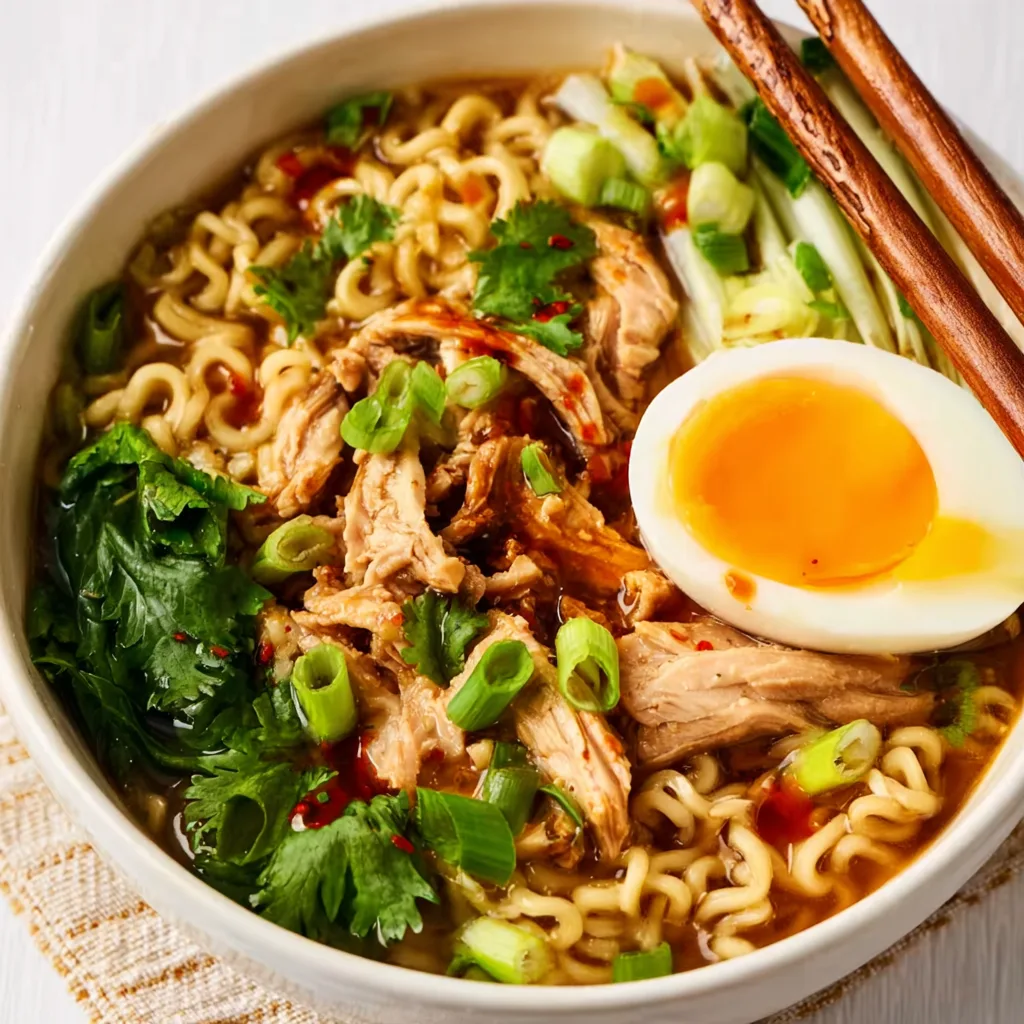
Homemade Chicken Ramen is the ultimate comfort food that transforms your kitchen into a cozy Japanese bistro with minimal effort. The magic happens when tender chicken meets a rich, umami-packed broth, creating a bowl that warms you from the inside out. I’ve spent years perfecting this recipe, balancing traditional techniques with practical shortcuts that don’t sacrifice flavor. Unlike those sad packet noodles from college days, this version delivers authentic depth with ingredients you can actually pronounce. Ready to slurp your way to happiness? Let’s dive into this soul-warming bowl of goodness.
Table of Contents
Recipe
Print
Homemade Chicken Ramen Recipe
- Prep Time: 15 minutes
- Cook Time: 25 minutes
- Total Time: 40 minutes
- Yield: 4 servings
- Category: Dinner
- Method: Stovetop
- Cuisine: Japanese-Inspired
Description
Homemade Chicken Ramen Recipe is an easy, comforting, and delicious noodle bowl packed with tender chicken, rich savory broth, ramen noodles, fresh vegetables, and classic Asian-inspired flavors. This cozy homemade ramen delivers restaurant-style comfort food perfect for quick dinners or chilly nights.
Ingredients
2 boneless skinless chicken breasts
1 tablespoon sesame oil
3 cloves garlic, minced
1 tablespoon fresh ginger, grated
6 cups chicken broth
2 tablespoons soy sauce
1 tablespoon miso paste
1 teaspoon sriracha
2 packs ramen noodles
2 soft-boiled eggs
1 cup mushrooms, sliced
1 cup baby spinach
2 green onions, sliced
1 tablespoon sesame seeds
1 teaspoon salt
1/2 teaspoon black pepper
Instructions
1. Season the chicken breasts with salt and black pepper.
2. Heat sesame oil in a large pot over medium heat.
3. Cook the chicken for 5 to 6 minutes per side until fully cooked.
4. Remove the chicken and slice it thinly.
5. Add garlic and ginger to the pot and cook for 30 seconds until fragrant.
6. Pour in chicken broth, soy sauce, miso paste, and sriracha.
7. Bring the broth to a gentle simmer.
8. Add sliced mushrooms and cook for 3 minutes.
9. Cook ramen noodles according to package directions directly in the broth.
10. Stir in baby spinach until wilted.
11. Divide the ramen noodles and broth between serving bowls.
12. Top with sliced chicken, soft-boiled eggs, green onions, and sesame seeds.
13. Serve warm immediately.
Notes
Use rotisserie chicken for quicker preparation.
Add bok choy or corn for extra texture and flavor.
Soft-boiled eggs create authentic ramen flavor.
Adjust the sriracha for more or less heat.
Store the broth separately from noodles for the best leftovers.
Why You’ll Love This Homemade Chicken Ramen
A Flavor Symphony in Every Spoonful
The beauty of homemade chicken ramen lies in its layered flavors that build with each element. The broth—oh, that broth!—simmers with ginger, garlic, and aromatics until it becomes liquid gold. When you take that first sip, you’ll experience waves of umami that store-bought versions simply can’t match. The chicken becomes melt-in-your-mouth tender, absorbing all those beautiful flavors while contributing its own richness. Each component plays its part perfectly, from the silky soft-boiled eggs to the springy noodles that catch every drop of that glorious broth.
Surprisingly Simple for Weeknight Dinners
Don’t let the impressive results fool you—this ramen is actually weeknight-friendly! While traditional versions might simmer for days, my streamlined approach delivers maximum flavor in about an hour. I’ve identified the non-negotiable elements that create authentic taste without the all-day commitment. The recipe breaks down into manageable steps that flow naturally, and many components can be prepped ahead. Even better, you can customize the toppings based on what’s already in your fridge. It’s the perfect solution for those evenings when you crave something special but don’t have endless hours.
Essential Tips & Tricks
Broth-Building Secrets
The soul of any great ramen is its broth, and a few key techniques will elevate yours from good to extraordinary. First, don’t skip the initial step of charring your onions and ginger—this adds remarkable depth. Second, be patient with your simmer; a gentle bubble rather than a rolling boil extracts flavor without cloudiness. For an umami boost, add a piece of kombu seaweed during the last 30 minutes (never boil it, or it’ll turn bitter). My favorite hack? Save Parmesan rinds in your freezer and toss one in—it adds incredible richness without tasting cheesy, similar to how creamy mushroom chicken pasta gets its depth.
Noodle and Topping Mastery
Perfect ramen requires perfect noodles—slightly chewy with enough structure to stand up to hot broth. Always cook noodles separately from your broth to prevent them from absorbing too much liquid and becoming mushy. For authentic texture, cook them about 30 seconds less than package directions, as they’ll continue cooking when you add hot broth. When it comes to toppings, contrast is key: something crunchy (bean sprouts), something fresh (scallions), something rich (soft-boiled egg), and something spicy (chili oil). Arrange toppings in sections rather than mixing for the most visually stunning presentation that makes everyone reach for their phones before their spoons.
Serving Ideas & Creative Variations
Build-Your-Own Ramen Bar
Transform dinner into an interactive experience with a build-your-own ramen bar that delights both kids and adults. Set out the hot broth, cooked noodles, and an array of colorful toppings in separate bowls. Include traditional elements like sliced chicken, jammy eggs, and nori, but don’t stop there! Add unexpected options like crispy bacon, roasted mushrooms, or even kimchi for an exciting fusion twist. This approach not only makes serving easier but creates a memorable dining experience. It’s perfect for casual entertaining—similar to how buffalo chicken quesadillas can be customized to each person’s heat preference.
Seasonal Adaptations Worth Trying
One of the joys of homemade ramen is how beautifully it adapts to the seasons. In summer, lighten things up with a citrus-infused broth, corn kernels, and quick-pickled vegetables that bring brightness. For autumn, incorporate roasted butternut squash and a drizzle of chili oil for warmth. Winter calls for heartier additions like braised greens and extra mushrooms, while spring welcomes tender asparagus tips and fresh pea shoots. The broth itself can shift too—use chicken thighs in colder months for richer flavor, switching to leaner breast meat when the weather warms. These seasonal shifts keep this recipe in regular rotation year-round.
Storage & Troubleshooting Guide
Proper Storage for Maximum Freshness
The key to successful ramen leftovers is proper component separation. Store your broth, noodles, and toppings in different containers—this prevents soggy noodles and preserves each element’s texture. The broth will keep for up to 4 days refrigerated, actually improving in flavor as it sits. For longer storage, freeze the broth in ice cube trays, then transfer to freezer bags for up to 3 months. The cooked chicken can be refrigerated for 3 days, while soft-boiled eggs should be consumed within 2 days. When reheating, bring the broth to a gentle simmer separately before adding freshly cooked noodles for the best texture and flavor.
Fixing Common Ramen Problems
Even experienced cooks encounter ramen challenges, but most are easily fixed. If your broth lacks depth, try adding a splash of fish sauce or a teaspoon of miso paste—both add instant umami without lengthy simmering. Cloudy broth? Strain it through a coffee filter for clarity. Noodles turning mushy? You’re likely overcooking them or letting them sit in hot broth too long—cook them al dente and add to serving bowls just before eating. If your ramen feels unbalanced, remember the four flavor dimensions: salt, acid, fat, and heat. Usually, a squeeze of lime juice or a drizzle of sesame oil will bring everything into perfect harmony.
Frequently Asked Questions
Can I make homemade chicken ramen ahead of time?
Yes! Prepare the broth and toppings up to 3 days ahead. Store components separately and cook fresh noodles just before serving. The broth actually develops better flavor after resting overnight.
What’s the best substitute for traditional ramen noodles?
Fresh or dried ramen noodles are ideal, but soba, udon, or even angel hair pasta work in a pinch. Look for noodles with some alkalinity to maintain that authentic springy texture.
How can I make my homemade chicken ramen spicier?
Add a dollop of chili oil, a teaspoon of gochujang, or fresh sliced jalapeños to your bowl. For the broth itself, simmer with whole dried chilies that can be removed before serving.
Can I make this recipe vegetarian?
Absolutely! Swap chicken broth for mushroom or vegetable broth and add extra umami with dried shiitakes, miso, and roasted vegetables. Top with marinated tofu instead of chicken.
What makes homemade chicken ramen broth so flavorful?
The magic comes from slowly simmering chicken bones with aromatics like ginger, garlic, and scallions. Adding kombu seaweed and dried mushrooms creates layers of umami that instant versions can’t match.
Final Thoughts
Homemade chicken ramen isn’t just a meal—it’s a sensory experience that brings people together over steaming bowls of comfort. There’s something deeply satisfying about creating those complex flavors in your own kitchen and watching loved ones slurp up every last drop. Whether you follow this recipe exactly or use it as a springboard for your own creative interpretations, the result will be infinitely better than anything from a packet. For more inspiration, check out my Pinterest board dedicated to Asian-inspired comfort foods. Now grab those chopsticks and dive in—your ramen journey is just beginning!