

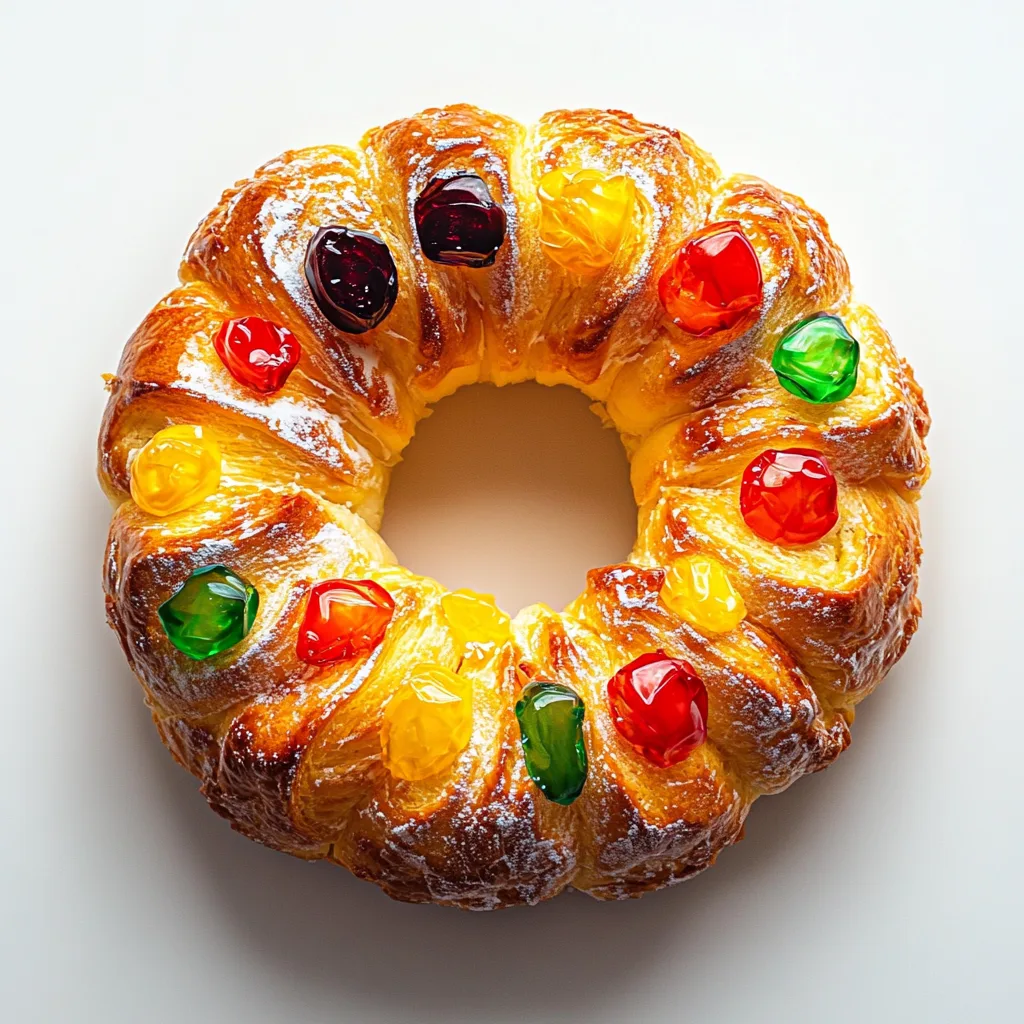
Rosca de Reyes brings the magic of Epiphany to your kitchen with its crown-like shape and vibrant candied fruits. This traditional sweet bread celebrates the arrival of the Three Kings and has become a cherished part of holiday traditions across Latin America and Spain. The soft, pillowy dough scented with orange blossom water creates an irresistible aroma that fills your home with warmth. I’ve spent years perfecting this recipe, and I’m thrilled to share all my secrets for creating this festive treat that’s as beautiful as it is delicious. Let’s bring some sweetness to your celebration!
Table of Contents
Recipe
Print
Traditional Rosca de Reyes Recipe | Authentic Mexican Three Kings Bread
- Prep Time: 20 minutes (plus rising time)
- Cook Time: 30 minutes
- Total Time: 3 hours
- Yield: 1 large Rosca (12 servings)
- Category: Dessert, Bread, Holiday
- Method: Baking, Kneading
- Cuisine: Mexican, Latin American
- Diet: Vegetarian
Description
This Traditional Rosca de Reyes is a light, buttery sweet bread flavored with orange and anise, decorated with candied fruit, and baked to celebrate Mexico’s Three Kings Day. Authentic, aromatic, and festive — it’s a true cultural classic!
Ingredients
**For the Dough**
4 cups all-purpose flour
2 ¼ tsp active dry yeast (1 packet)
½ cup warm milk (about 110°F / 43°C)
½ cup sugar
3 large eggs, room temperature
1 tbsp orange zest
1 tbsp anise seeds (optional, or ½ tsp extract)
½ tsp salt
½ cup unsalted butter, softened
**For the Topping (Pasta Dulce)**
½ cup all-purpose flour
½ cup powdered sugar
¼ cup unsalted butter, softened
1 egg yolk
**For Decoration**
Candied fruits (figs, cherries, citron, or guava strips)
1 small baby figurine (optional, traditional)
1 egg (for egg wash)
Instructions
1. In a small bowl, combine warm milk, yeast, and 1 tbsp sugar. Let sit 10 minutes until frothy.
2. In a large mixing bowl, combine flour, remaining sugar, salt, orange zest, and anise seeds. Mix well.
3. Add yeast mixture, eggs, and softened butter. Mix and knead until smooth (about 8–10 minutes by hand or 5 minutes with a mixer).
4. Form dough into a ball, place in a greased bowl, cover, and let rise in a warm place for 1½–2 hours or until doubled in size.
5. Punch down dough and shape into a large ring (about 12–14 inches in diameter). Place on a parchment-lined baking sheet.
6. Insert the small figurine underneath from the bottom if using. Cover and let rise again for 45 minutes.
7. Preheat oven to 350°F (175°C).
8. **Make the topping:** In a bowl, mix flour, powdered sugar, butter, and yolk until a soft dough forms.
9. Roll into flat strips and place over the ring in several spots.
10. Brush bread with egg wash and decorate with candied fruits.
11. Bake 25–30 minutes until golden brown and fragrant.
12. Cool slightly, slice, and enjoy this traditional festive bread — soft, buttery, and full of meaning!
Notes
Traditionally eaten on January 6th (Día de Reyes), whoever finds the figurine must host *Día de la Candelaria* (Candlemas Day) on February 2nd.
Add a splash of orange blossom water for an authentic bakery aroma.
Store leftovers covered at room temperature for up to 3 days or freeze for up to 1 month.
Why You’ll Love This Rosca de Reyes
A Centerpiece with Cultural Significance
The Rosca de Reyes isn’t just a delicious bread—it’s a meaningful tradition that brings families together. The oval shape symbolizes a king’s crown, while the colorful candied fruits represent the jewels adorning it. Hidden inside is a small figurine representing baby Jesus, and whoever finds it in their slice has special privileges (and responsibilities!) for the coming year. I love how this bread creates such joyful moments around the table, with everyone eagerly cutting their slice to see if they’ve found the prize. The anticipation and laughter make this so much more than just a recipe.
Customizable to Your Taste
One thing I adore about Rosca de Reyes is how wonderfully adaptable it is while still honoring tradition. The classic version features candied fruits like figs, cherries, and citrus peel, but you can personalize it with your family’s favorites. Some regions add cream cheese filling or cinnamon-sugar swirls. The topping can range from simple sugar to elaborate designs with nuts and more candied fruit. You can even adjust the flavorings in the dough—some bakers prefer anise or vanilla instead of orange blossom water. The possibilities are endless, making this a recipe you can truly make your own.
Essential Tips & Tricks
Mastering the Dough
The heart of a perfect Rosca de Reyes is its pillowy-soft texture, which requires patience and proper technique. Allow your yeast to bloom fully in warm (not hot!) liquid—around 110°F is ideal. When kneading, look for the “windowpane test”: stretch a small piece of dough until it’s thin enough to see light through without tearing. Don’t rush the rising process; the dough needs time to develop those lovely air pockets. I find that placing the dough in a slightly warm oven (turned off) with a pan of hot water creates the perfect environment for rising, especially during winter months when kitchens can be chilly. Your patience will be rewarded!
Decorating Like a Pro
Creating a beautiful Rosca is part of the joy! For truly eye-catching decorations, arrange your candied fruits in a pattern rather than randomly scattering them. Press them gently into the dough so they don’t fall off during baking, but not so deep they disappear. The traditional sugar topping should be applied after egg washing but before baking. For an extra-special touch like those in Mexican bakeries, try making a simple paste from flour, sugar, and butter to pipe decorative lines across the top. Remember to insert your plastic baby figurine from the bottom after baking—never before, as it would melt!
Serving Ideas & Creative Variations
Traditional Pairings
Rosca de Reyes is traditionally enjoyed with hot chocolate or coffee, creating a perfect balance between the sweet bread and rich, warming drinks. In Mexico, the classic pairing is champurrado, a thick chocolate drink made with masa harina, while in Spain, you might find it served with thick hot chocolate for dipping. I love setting up a little beverage station with both options, plus some warm milk for the kids. The bread itself is often served on January 6th (Epiphany) and sometimes again on February 2nd (Candlemas) in some regions. Serve it slightly warm for the best texture and aroma, just like they do with delicious cinnamon treats.
Modern Twists
While I cherish traditional Rosca, I’ve had fun creating fusion versions that blend cultures and flavors. Try adding cardamom and saffron to the dough for a Scandinavian-Spanish fusion, or incorporate matcha powder and red bean paste for a Japanese-inspired variation. For a truly decadent twist, fill the ring with cream cheese frosting after baking and top with fresh berries. You can even transform leftover Rosca into an incredible bread pudding or French toast the next morning. My family especially loves when I brush the warm bread with orange-infused honey right after baking, giving it a glistening appearance and extra layer of flavor.
Storage & Troubleshooting Guide
Keeping It Fresh
Rosca de Reyes is best enjoyed within 24-48 hours of baking, but proper storage can extend its freshness. Once completely cooled, wrap it tightly in plastic wrap or place in an airtight container at room temperature. Avoid refrigerating, as this accelerates staling. If you need to store it longer than two days, freezing works wonderfully—just wrap individual portions in plastic wrap, then foil, and freeze for up to three months. To refresh a day-old Rosca, spritz it lightly with water and warm in a 300°F oven for about 5 minutes. The gentle heat will revive the texture and aroma, making it almost as good as freshly baked!
Troubleshooting Common Issues
If your Rosca turns out dense rather than fluffy, the most likely culprits are under-proofing or old yeast. Make sure your yeast is active by checking for bubbles during blooming, and give the dough enough time to double in size during both rises. If your decoration keeps falling off, try pressing the fruits deeper into the dough and applying a thicker egg wash as “glue.” For cracking during baking, ensure you’re not placing the Rosca in too hot an oven—start at 350°F and adjust as needed. If the top browns too quickly, loosely tent with foil halfway through baking. Remember that even imperfect Roscas are delicious and part of the homemade charm!
Frequently Asked Questions
What is the significance of the baby figurine in Rosca de Reyes?
The baby represents Jesus in hiding from King Herod. Finding it symbolizes good luck, but traditionally means you’ll host a tamales party on February 2nd (Candlemas) for everyone who shared the Rosca.
Can I make Rosca de Reyes ahead of time?
Yes! Prepare the dough through shaping, then refrigerate overnight for a slow rise. Let it come to room temperature for 30 minutes before baking for the best results.
What if I don’t have orange blossom water for my Rosca de Reyes?
Orange zest and a splash of vanilla make an excellent substitute. You’ll still get beautiful citrus notes that complement the traditional flavors.
Is it possible to make a gluten-free version?
Absolutely! Use a 1:1 gluten-free flour blend with xanthan gum. The texture will be slightly different, but still delicious with all the traditional flavors.
Can I use fresh fruit instead of candied fruit?
Fresh fruit releases too much moisture during baking. Try dried fruits like cranberries, apricots, or cherries as a more natural alternative to traditional candied fruits.
Final Thoughts
Creating a beautiful Rosca de Reyes is more than just baking—it’s participating in a centuries-old tradition that brings people together. The joy of sharing this special bread, watching loved ones discover who gets the hidden figurine, and enjoying its soft, aromatic slices with a warm drink creates memories that last long after the last crumb is gone. I hope this guide helps you create your own perfect Rosca, whether you stick to tradition or add your personal touch. For more festive recipes and inspiration, visit my Pinterest board where I’m always adding new ideas for celebrations throughout the year!