

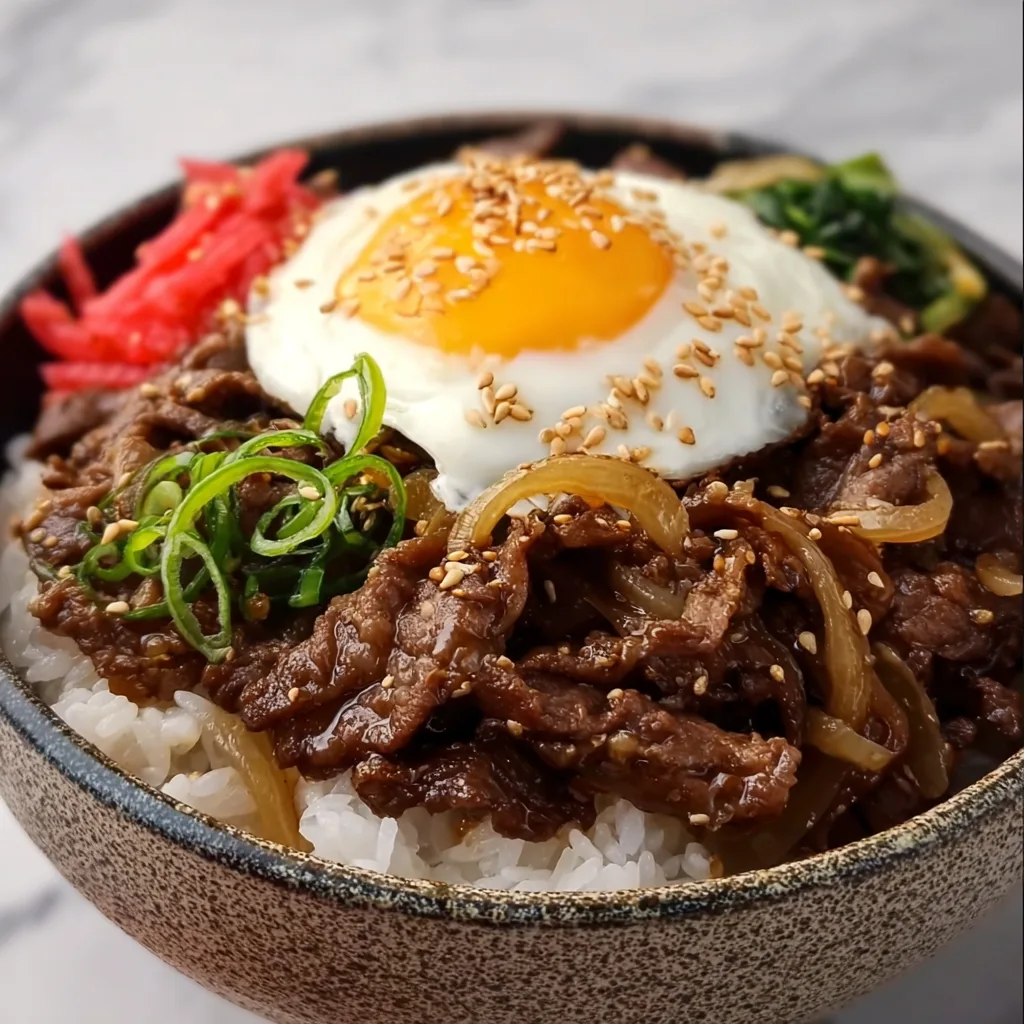
Gyudon, that soul-warming Japanese beef rice bowl, has been my weeknight salvation more times than I can count. The tender slices of beef and onions simmered in a sweet-savory sauce that cascades over a steaming bowl of rice—it’s pure comfort in every bite. When the aroma fills my kitchen, I’m instantly transported to those tiny Tokyo restaurants where businessmen huddle over counters, savoring this humble yet magnificent dish. There’s something magical about how simple ingredients transform into something so deeply satisfying. If you’re craving a taste of Japan that’s both authentic and achievable, this gyudon recipe is your answer.
Table of Contents
Recipe
Print
Authentic Gyudon Recipe: Delicious Japanese Beef Rice Bowl Made Easy
- Prep Time: 10 minutes
- Cook Time: 15 minutes
- Total Time: 25 minutes
- Yield: 4 servings
- Category: Dinner
- Method: Stovetop
- Cuisine: Japanese
Description
This authentic gyudon recipe features thinly sliced beef simmered in a savory-sweet sauce and served over rice for a quick, comforting Japanese meal.
Ingredients
1 pound thinly sliced beef (ribeye or sirloin)
1 onion, thinly sliced
2 cups cooked white rice
1 cup dashi broth
3 tablespoons soy sauce
2 tablespoons mirin
1 tablespoon sugar
1 tablespoon sake
1 teaspoon grated ginger
2 green onions, sliced
Pickled ginger, optional
Instructions
1. Cook white rice and keep warm.
2. In a large skillet, add dashi broth, soy sauce, mirin, sugar, and sake.
3. Bring to a simmer over medium heat.
4. Add sliced onions and cook until softened.
5. Add thinly sliced beef and gently separate pieces.
6. Simmer for 5 to 7 minutes until beef is cooked through and tender.
7. Stir in grated ginger.
8. Spoon cooked rice into bowls.
9. Top with beef and onion mixture along with some sauce.
10. Garnish with green onions and pickled ginger if desired.
11. Serve immediately.
Notes
Use very thinly sliced beef for best texture.
Substitute dashi with beef broth if needed.
Do not overcook the beef to keep it tender.
Top with a soft egg for extra richness.
Why You’ll Love This Gyudon (Japanese Beef Rice Bowl)
Quick Comfort Food with Authentic Flavor
This gyudon comes together in just 20 minutes but tastes like it’s been simmering all day. The sweet-savory balance of soy sauce, mirin, and sugar creates that distinctive umami flavor that’s unmistakably Japanese. I love how the thinly sliced beef absorbs all those gorgeous flavors while staying tender. The caramelized onions add a subtle sweetness that complements the savory beef perfectly. When a busy weeknight has me frazzled, I know this dish will deliver maximum flavor with minimal effort—exactly what we all need in our cooking arsenal.
Budget-Friendly Yet Restaurant-Quality
Using affordable cuts like ribeye or chuck that you slice paper-thin makes gyudon incredibly economical. I’ve found that freezing the beef for 30 minutes before slicing makes it much easier to get those delicate, melt-in-your-mouth pieces. One pound of beef easily stretches to feed four when paired with rice and a simple side. The ingredients are pantry staples that keep well, so you can whip this up without a special shopping trip. I’ve served this to guests who swore it was better than their favorite Japanese restaurant—all for a fraction of the price!
Essential Tips & Tricks
Mastering the Perfect Beef Texture
The secret to authentic gyudon lies in the beef slicing technique. Ask your butcher to slice it paper-thin, or partially freeze it at home for easier cutting. I’ve found that ribeye offers the perfect balance of flavor and tenderness, but chuck works beautifully too. Don’t overcook the beef—it should just barely lose its pink color. The residual heat will continue cooking it to perfection. Allow the beef to simmer in the sauce just long enough to absorb the flavors without becoming tough. This gentle cooking approach creates that signature melt-in-your-mouth texture that makes gyudon so addictive.
Balancing the Signature Sauce
The gyudon sauce should strike the perfect harmony between sweet, savory, and umami. Use authentic Japanese ingredients when possible—especially the mirin and sake, which add depth you can’t replicate with substitutes. If your sauce tastes too sweet, add a splash of rice vinegar. Too salty? A teaspoon of sugar will balance it right out. I like to add a tablespoon of grated apple for natural sweetness and complexity. For an extra umami punch, try adding a spoonful of dashi powder to your sauce—it’s a game-changer that elevates the entire dish.
Serving Ideas & Creative Variations
Traditional and Modern Accompaniments
Serve your gyudon with traditional toppings like a raw egg yolk, benishoga (red pickled ginger), and thinly sliced scallions. The egg creates a silky sauce when mixed with the hot beef and rice—absolutely divine! For a refreshing contrast, serve with tsukemono (Japanese pickles) on the side. I love adding a sprinkle of togarashi (Japanese chili powder) for a subtle heat that enhances all the flavors. For a complete meal, pair with a simple miso soup and quick cucumber salad dressed with rice vinegar. These authentic accompaniments transform a simple bowl into a complete Japanese dining experience.
Fusion Twists on the Classic
Get creative with your gyudon by adding non-traditional ingredients that complement the classic flavors. Try topping with avocado slices and a drizzle of spicy mayo for a California-inspired version. For extra vegetables, I sometimes add thinly sliced bell peppers or mushrooms to simmer with the onions. Kimchi gyudon is another favorite variation—just add a spoonful of kimchi on top for a spicy-tangy kick. For a low-carb option, serve over cauliflower rice or zucchini noodles instead of traditional white rice. These creative adaptations keep the dish exciting while honoring its Japanese roots.
Storage & Troubleshooting Guide
Proper Storage and Reheating
Store leftover gyudon with the beef and rice separately for best results. The beef mixture keeps well in an airtight container for up to 3 days in the refrigerator, while rice stays fresh for 4-5 days. When reheating, add a tablespoon of water to the beef mixture to restore moisture before warming gently on the stovetop. Microwave reheating works in a pinch, but use 70% power in 30-second intervals to prevent overcooking. For meal prep, I portion the beef mixture into small containers and freeze for up to 2 months—just thaw overnight in the refrigerator before reheating.
Fixing Common Gyudon Problems
If your beef turns out tough or chewy, it’s likely either sliced too thick or overcooked. Next time, ensure paper-thin slices and shorter cooking time. For watery sauce, simmer uncovered for a few extra minutes to reduce and concentrate the flavors. If your sauce is too salty, add a splash of water and a teaspoon of sugar to rebalance. When the flavor seems flat, a teaspoon of rice vinegar or a squeeze of fresh lemon juice will brighten everything up. Remember that authentic gyudon has a glossy sauce that clings to the beef—if yours is dull, try adding a touch of mirin or a small pat of butter.
Frequently Asked Questions
What’s the best cut of beef for gyudon?
Ribeye or chuck work best when sliced paper-thin. The marbling provides flavor while keeping the meat tender during the quick cooking process. Sukiyaki-cut beef from Asian markets is ideal if available.
Can I make gyudon without sake or mirin?
Yes, though the flavor will be slightly different. Substitute dry sherry or rice vinegar with a pinch of sugar for sake. For mirin, use 1 tablespoon rice vinegar plus 1 teaspoon sugar per tablespoon.
How do I slice beef thinly enough for authentic gyudon?
Freeze beef for 30 minutes until firm but not solid. Use a very sharp knife to cut against the grain in the thinnest possible slices. Alternatively, ask your butcher to slice it for sukiyaki.
What makes gyudon different from other Japanese beef bowls?
Gyudon specifically features beef and onions simmered in a sweet-savory sauce of soy, mirin, and sugar. The cooking method and sauce distinguish it from other Japanese beef bowls like sukiyaki or yakiniku don.
How can I make my gyudon spicy?
Add sliced fresh chilis while cooking or sprinkle with shichimi togarashi (Japanese seven-spice blend) before serving. For a Korean-inspired twist, add gochujang (Korean chili paste) to the sauce.
Final Thoughts
There’s something deeply comforting about a steaming bowl of gyudon that makes it more than just dinner—it’s an experience. The simplicity of this Japanese beef rice bowl belies its complex flavors and the way it satisfies on every level. I hope this recipe brings a touch of Tokyo to your table, whether you’re cooking for yourself after a long day or sharing with loved ones. Remember that the best gyudon comes from quality ingredients and attention to detail, but don’t be afraid to make it your own. For more international comfort food inspiration, visit my Pinterest board where I’m always adding new favorites!