

There’s something magical about the transformation that happens when humble root vegetables meet the fiery, complex sweetness of gochujang. This Gochujang Roasted Root Veg recipe has become my cold-weather kitchen savior, turning ordinary carrots, parsnips, and sweet potatoes into something extraordinary with just a few ingredients.
The Korean chili paste adds a perfect balance of heat, sweetness, and umami that caramelizes beautifully in the oven, creating crispy edges and tender centers. I first discovered this combination when looking for ways to jazz up my weekly meal prep, and now it’s a staple that even my veggie-skeptical husband requests by name. It pairs beautifully with everything from a simple roast chicken to hearty holiday feasts, making it the versatile side dish your recipe collection needs.
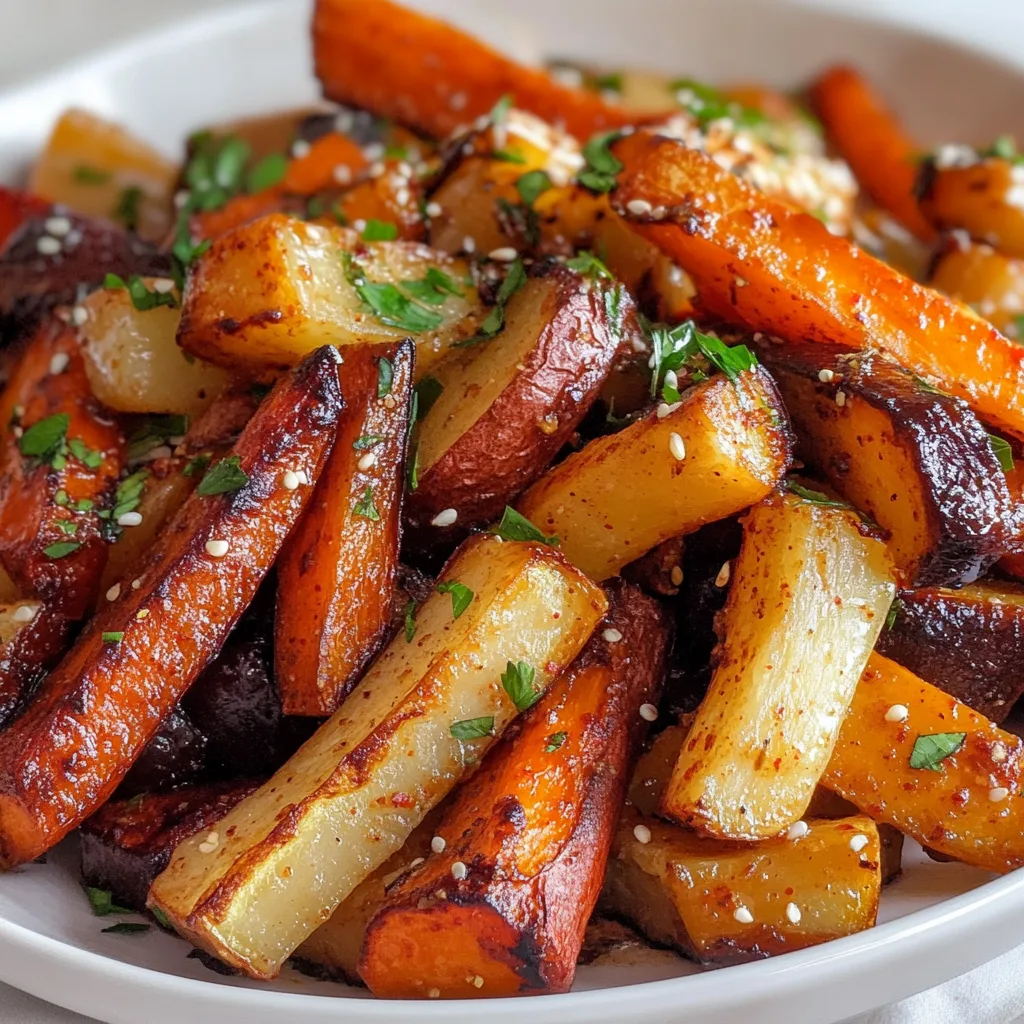
Table of Contents
Recipe
Print
Gochujang Roasted Root Vegetables Recipe | Spicy Korean-Inspired Side Dish
- Prep Time: 15 minutes
- Cook Time: 35 minutes
- Total Time: 50 minutes
- Yield: 4 servings
- Category: Side Dish
- Method: Roasted
- Cuisine: Korean Fusion
- Diet: Vegan
Description
These gochujang roasted root vegetables are spicy, savory, and caramelized to perfection. The Korean chili paste adds a deep, bold heat that pairs beautifully with sweet roasted carrots, parsnips, and potatoes — an easy, flavor-packed side dish for any meal.
Ingredients
2 cups carrots, cut into chunks
2 cups parsnips, cut into chunks
2 cups potatoes or sweet potatoes, cubed
1 small red onion, sliced
2 tablespoons olive oil
2 tablespoons gochujang (Korean chili paste)
1 tablespoon soy sauce
1 tablespoon honey or maple syrup
1 teaspoon rice vinegar
2 cloves garlic, minced
1/2 teaspoon salt
1/4 teaspoon black pepper
Optional: sesame seeds, green onions
Instructions
1. Preheat oven to 425°F (220°C) and line a baking sheet with parchment.
2. Place carrots, parsnips, potatoes, and red onion in a large bowl.
3. In another bowl, whisk olive oil, gochujang, soy sauce, honey, rice vinegar, garlic, salt, and pepper.
4. Pour the sauce over the vegetables and toss until fully coated.
5. Spread vegetables on the baking sheet in a single layer.
6. Roast for 30–35 minutes, flipping halfway, until caramelized and tender.
7. Garnish with sesame seeds and green onions before serving.
Notes
Adjust spice level by adding more or less gochujang.
Great with tofu, chicken, or roasted meats.
Drizzle with a little sesame oil after roasting for extra depth.
Why You’ll Love This Gochujang Roasted Root Veg
A Symphony of Flavors and Textures
The magic of this dish lies in its perfect balance of flavors and textures. The natural sweetness of carrots, parsnips, and sweet potatoes deepens and concentrates in the oven, creating a beautiful counterpoint to the complex heat of the gochujang paste. That Korean chili paste is truly the star here—offering layers of flavor that simple red pepper flakes could never achieve. It’s fermented, which brings a subtle tanginess alongside its signature heat and sweetness.
When the vegetables emerge from the oven, they’re beautifully caramelized on the outside while remaining tender inside. The sesame oil adds a nutty richness, while a final sprinkle of sesame seeds and green onions brings fresh contrast and visual appeal. Even vegetable skeptics find themselves reaching for seconds when these hit the table.
Effortless Elegance for Any Occasion
What I adore about this recipe is how it effortlessly straddles the line between everyday simple and dinner-party worthy. On busy weeknights, I can prep these veggies in under 10 minutes, slide them into the oven, and focus on the rest of dinner while they roast to perfection. The hands-off cooking time makes this ideal for multitasking meal preparation. Yet these same vegetables feel special enough for holidays and gatherings, bringing a pop of color and unexpected flavor to traditional spreads.
The vibrant orange, purple, and cream colors create a stunning presentation that requires zero fancy techniques. I’ve served this alongside Thanksgiving turkey, Christmas ham, and at casual Sunday dinners—it’s always met with requests for the recipe. Plus, it’s naturally gluten-free, dairy-free and vegan (if you check your gochujang ingredients), making it perfect for accommodating various dietary needs.
Essential Tips & Tricks
Mastering the Perfect Roast
The key to achieving those coveted crispy edges and tender centers lies in a few simple techniques. First, cut your vegetables into similar-sized pieces—about 1-inch chunks work perfectly—to ensure even cooking. I’ve found that preheating your baking sheet in the oven creates an immediate sizzle when the vegetables hit the hot surface, jumpstarting the caramelization process. Don’t be tempted to overcrowd the pan; vegetables need space to roast properly.
If making a large batch, use two sheet pans rather than cramming everything onto one. Tossing the vegetables halfway through cooking ensures all sides get that beautiful caramelization. The gochujang marinade contains sugar that can burn if your oven runs hot, so keep an eye on things after the 25-minute mark. The vegetables are done when they’re fork-tender but still hold their shape—overcooked root vegetables become mushy and lose their delightful texture contrast.
Ingredient Selection and Preparation
The beauty of this recipe lies in its flexibility, but some ingredient choices will elevate your results. When selecting root vegetables, look for firm specimens without soft spots. I particularly love the sweetness that parsnips bring to this dish, though they’re optional if you can’t find them. For gochujang paste, quality matters—look for it in Asian markets or the international aisle of well-stocked grocery stores. The percentage of heat (often marked on the container) ranges from 3% to 10%, so choose according to your spice preference.
A medium-heat gochujang (around 5-6%) offers the perfect balance for most palates. When preparing your vegetables, don’t peel carrots if they’re organic—just scrub them well to preserve nutrients and add visual interest. Sweet potatoes and parsnips should be peeled for the best texture. If you’re sensitive to heat, start with less gochujang and adjust upward in future batches. Remember that the heat mellows somewhat during roasting as the sugars caramelize.
Serving Ideas & Creative Variations
Perfect Pairings for Every Meal
These gochujang-glazed vegetables are incredibly versatile when it comes to building a complete meal. For weeknight dinners, I love serving them alongside a simple protein like roasted chicken thighs, grilled salmon, or baked tofu—the vegetables bring all the flavor you need. They’re particularly wonderful with dishes that have a neutral flavor profile that won’t compete with their bold taste. For a plant-based meal, serve them atop fluffy quinoa or brown rice with a fried egg and sliced avocado for a Korean-inspired grain bowl.
The sweet-spicy glaze makes these vegetables an unexpected but perfect companion to traditional holiday roasts, bringing a modern twist to the table. They’re also fantastic as part of a larger spread of small plates or tapas-style dining. For brunch, try them alongside a simple egg bake or breakfast casserole for a savory morning option that breaks away from typical breakfast fare.
Exciting Twists on the Basic Recipe
While the classic recipe is a staple in my kitchen, I love experimenting with variations that keep it fresh and exciting. For a heartier dish, add cubed butternut squash or chunks of red onion to the vegetable mix—both caramelize beautifully with the gochujang glaze. To introduce more protein, toss in some chickpeas for the last 15 minutes of roasting time. They’ll get crispy and absorb the flavors wonderfully. For a tangier profile, add a tablespoon of rice vinegar to the marinade, or incorporate a tablespoon of grated ginger for a warming zing.
During summer months, this same glaze works beautifully on grilled vegetables like zucchini, bell peppers, and eggplant. For a fusion twist, sprinkle crumbled feta or goat cheese over the hot vegetables just before serving—the creamy saltiness creates a delightful contrast. If you enjoy herbs, finish with fresh cilantro instead of green onions, or try a combination of both for brightness. For extra texture, add a handful of roughly chopped cashews or peanuts in the last five minutes of roasting.
Storage & Troubleshooting Guide
Keeping Leftovers at Their Best
One of the many virtues of these gochujang-roasted vegetables is how well they hold up as leftovers, making them perfect for meal prep. Once completely cooled, store them in an airtight container in the refrigerator for up to 4 days.
The flavors actually deepen and meld overnight, making them sometimes even more delicious the next day. To reheat, avoid the microwave if possible—it tends to make roasted vegetables soggy. Instead, spread them on a baking sheet and warm in a 350°F oven for about 7-10 minutes until heated through. This method revives some of that crispy exterior. These vegetables are also delicious cold or at room temperature, making them perfect for lunch boxes or quick snacks. If you want to freeze them, you can, though the texture will soften somewhat upon thawing. Freeze in a single layer on a baking sheet first, then transfer to a freezer bag once solid. This prevents them from freezing in one clump.
Troubleshooting Common Issues
Even with this forgiving recipe, occasional challenges can arise. If your vegetables are burning on the outside before becoming tender inside, your oven may be running hot or the pieces might be too large. Next time, lower the temperature by 25°F and cut the vegetables slightly smaller. Conversely, if your vegetables seem soggy rather than caramelized, your baking sheet might be overcrowded. The vegetables need space to release moisture and brown properly.
Always use two pans rather than crowding one. If the gochujang flavor seems too mild, remember that the spice level can vary dramatically between brands. Try a different brand with a higher percentage of heat, or simply increase the amount in your marinade next time. For vegetables that stick to the pan, make sure you’re using enough oil and consider lining your baking sheet with parchment paper. If you find the vegetables too spicy, serve them with a cooling element like a dollop of Greek yogurt or a drizzle of honey to balance the heat.
Frequently Asked Questions
Can I make this recipe less spicy?
Absolutely! Reduce the gochujang to 1-2 tablespoons and increase the maple syrup or honey slightly. The caramelization will still occur, giving you all the flavor with less heat. You can also serve it with a cooling element like yogurt on the side.
What can I substitute for gochujang if I can’t find it?
While nothing perfectly replicates gochujang’s unique flavor, a workable substitute is 1 tablespoon tomato paste, 1 tablespoon red pepper flakes, and 1 teaspoon each of honey and soy sauce. Miso paste with chili sauce can also work in a pinch.
Can I prep this dish ahead of time?
Yes! Cut all vegetables and mix the marinade up to 2 days ahead, storing separately in the refrigerator. You can even toss the vegetables in the marinade up to 8 hours before roasting for deeper flavor penetration.
Which root vegetables work best in this recipe?
Sweet potatoes, carrots, and parsnips are my go-to combination, but turnips, rutabaga, and golden beets also work beautifully. Avoid regular potatoes as they don’t caramelize as well with the sweet glaze.
Is this recipe suitable for meal prep?
Definitely! These vegetables maintain their flavor and texture wonderfully for 3-4 days refrigerated. They’re versatile enough to repurpose in grain bowls, salads, wraps, or alongside different proteins throughout the week.
Final Thoughts
There’s something deeply satisfying about transforming humble root vegetables into a dish that makes people pause mid-bite and ask for the recipe. This Gochujang Roasted Root Veg does exactly that—it’s one of those magical combinations that’s far more than the sum of its parts. I love how it brings unexpected flavors to familiar vegetables, creating something both comforting and exciting.
Whether you’re looking to expand your vegetable repertoire, need a standout side dish for a special meal, or simply want to experience the magic of gochujang’s complex flavor profile, this recipe delivers on all fronts. The vibrant colors, contrasting textures, and perfect balance of sweet, spicy, and savory make it a true kitchen winner. I hope it brings as much joy to your table as it has to mine!