

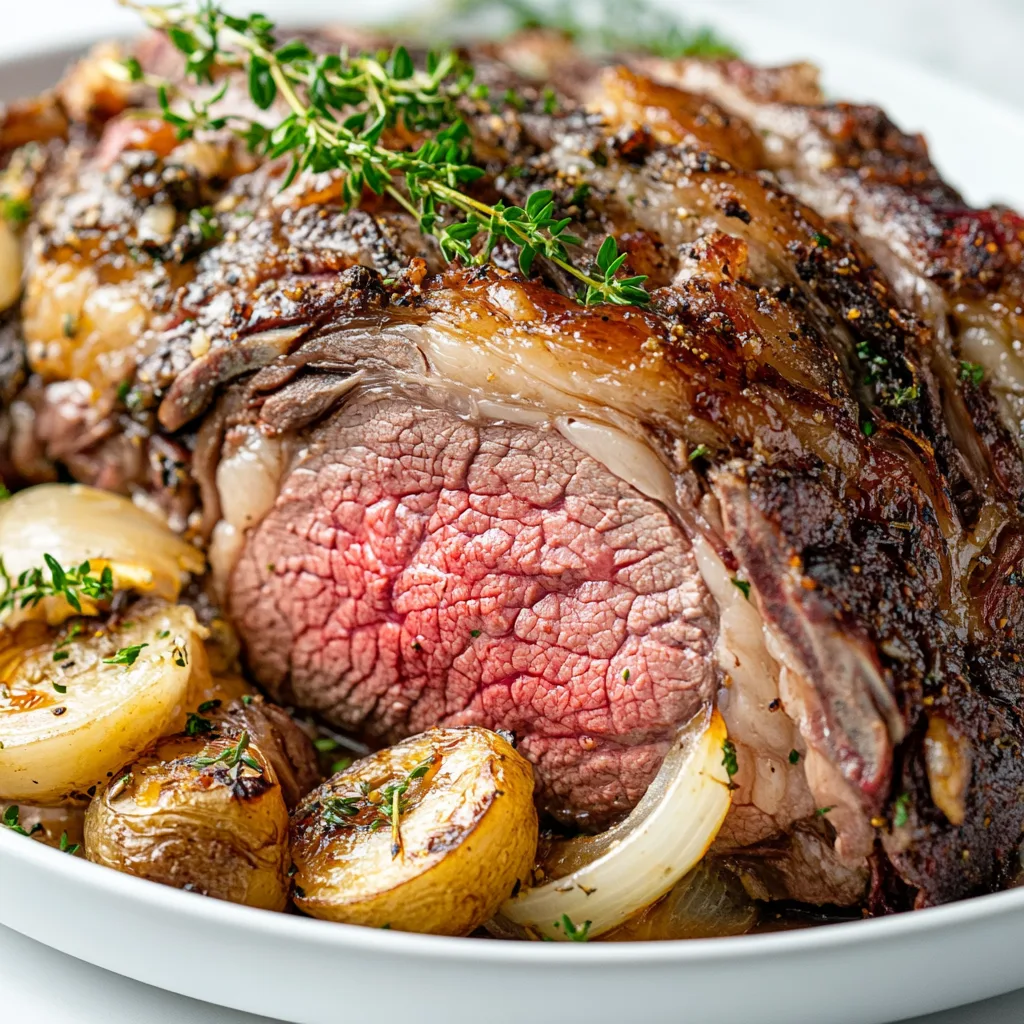
The aroma of a perfectly prepared Easy Slow-Roasted Prime Rib wafting through my kitchen never fails to transport me back to those special holiday gatherings at my grandmother’s house. There’s something almost magical about the way this majestic cut of beef transforms into a tender, juicy masterpiece with just a little patience and the right technique. I’ve spent years perfecting this method, and I’m thrilled to share it with you today! The beauty of slow-roasting is that it creates a consistently pink interior with a deliciously seasoned crust that will have everyone at your table asking for seconds. Trust me, this isn’t just dinner—it’s an experience worth savoring.
Table of Contents
Recipe
Print
Easy Slow-Roasted Prime Rib Recipe | Tender & Juicy Perfect Roast
- Prep Time: 20 minutes
- Cook Time: 2 hours 30 minutes
- Total Time: 2 hours 50 minutes
- Yield: 6 servings
- Category: Dinner
- Method: Roasted
- Cuisine: American
Description
This easy slow-roasted prime rib recipe gives you a perfectly tender, juicy roast with a beautifully browned crust. The low-and-slow method ensures evenly cooked, melt-in-your-mouth slices—ideal for holidays, special occasions, or an impressive Sunday dinner.
Ingredients
1 (4–5 pound) bone-in prime rib roast
2 teaspoons kosher salt
1 teaspoon freshly ground black pepper
1 teaspoon garlic powder
1 teaspoon onion powder
1 teaspoon dried rosemary, crushed
1 teaspoon dried thyme
3–4 cloves garlic, minced
2 tablespoons olive oil or softened butter
Optional: 1 cup beef broth or red wine for jus
Instructions
1. Remove the prime rib from the refrigerator 1–2 hours before cooking to bring it to room temperature.
2. Preheat the oven to 450°F (230°C).
3. In a small bowl, combine salt, pepper, garlic powder, onion powder, rosemary, thyme, minced garlic, and olive oil or butter to form a paste.
4. Pat the roast dry with paper towels and rub the paste all over the roast, including the fat cap.
5. Place the roast bone-side down on a rack in a roasting pan.
6. Roast at 450°F (230°C) for 15–20 minutes to develop a browned crust.
7. Reduce the oven temperature to 250°F (120°C) and continue roasting for 2–2 1/2 hours, or until the internal temperature reaches 120–125°F (49–52°C) for medium-rare.
8. Remove the roast from the oven, tent loosely with foil, and rest for 20–30 minutes so the juices redistribute.
9. Slice along the bones to remove them, then carve into thick slices and serve.
10. Optional: for a simple jus, place the roasting pan over medium heat, add beef broth or red wine, and simmer while scraping up browned bits.
Notes
Use a meat thermometer for best results—slow roasting gives you very even doneness.
Letting the roast rest is key for ultra-juicy slices.
Great served with mashed potatoes, roasted vegetables, and horseradish sauce.
Why You’ll Love This Easy Slow-Roasted Prime Rib
Perfect for Special Occasions
There’s a reason prime rib is the centerpiece of so many holiday tables and celebration meals. The impressive presentation alone makes this roast worthy of your most special gatherings. I love watching guests’ eyes widen as I bring this beautiful cut to the table, its exterior caramelized to a rich mahogany while the inside promises buttery-soft pink perfection. Despite its grand appearance, the slow-roasting method actually makes this dish surprisingly stress-free to prepare. The extended cooking time at a low temperature gives you flexibility with timing and removes the anxiety of potentially overcooking this premium cut. It’s my go-to whenever I want to create a memorable dining experience without being trapped in the kitchen.
Foolproof Method for Beginners
Don’t let the premium price tag intimidate you—this slow-roasting method is actually incredibly forgiving. Unlike high-heat methods that require split-second timing, slow-roasting creates a wide window of perfect doneness. The gentle heat gradually brings the meat to temperature, ensuring even cooking from edge to edge. I remember my first attempt years ago, nervously checking the thermometer every five minutes! Now I know that the low and slow approach gives you at least 30 minutes of leeway before your perfect medium-rare becomes medium. The other beginner-friendly aspect is the simple preparation.
You don’t need fancy equipment or complicated techniques—just good seasoning, a reliable meat thermometer, and patience. This is truly a method where the quality of the ingredients does most of the work.
Essential Tips & Tricks
Selecting and Preparing Your Roast
Choosing the right cut is your first step toward prime rib perfection. Look for a roast with generous marbling throughout—those beautiful white streaks of fat melt during cooking, basting the meat from within and creating that melt-in-your-mouth texture we’re after. I prefer bone-in cuts (sometimes called a “standing rib roast”) as the bones act as a natural roasting rack and add tremendous flavor. For the best results, bring your roast to room temperature for at least 2 hours before cooking. This critical step ensures even cooking from edge to center.
While your roast warms up, prepare a simple but powerful seasoning mix. I love a classic blend of kosher salt, freshly cracked black pepper, minced garlic, and fresh rosemary. Apply this generously to create that irresistible crust I mentioned earlier.
Temperature Control and Resting
The secret to perfect prime rib lies in precise temperature management. I always start with a hot oven (around 450°F) for about 20 minutes to develop that beautiful exterior crust, then reduce to a gentle 225-250°F for the remainder of cooking time. Your best friend in this process is a good meat thermometer—I prefer a probe style that can stay in the roast while cooking.
For a perfect medium-rare, remove the roast when the internal temperature reaches 125-130°F, as it will continue cooking during the resting phase. Speaking of resting, this step is non-negotiable! Let your masterpiece rest for at least 20-30 minutes under a loose foil tent. This allows the juices to redistribute throughout the meat rather than spilling onto your cutting board when sliced.
Serving Ideas & Creative Variations
Classic Accompaniments
The beauty of a perfectly executed prime rib is that it pairs wonderfully with both simple and elaborate side dishes. For traditional holiday meals, I love serving it with creamy horseradish sauce that provides a delightful contrast to the rich meat. The sharp, spicy bite cuts through the fattiness beautifully. My homemade au jus is another must-have—I collect the drippings, skim off excess fat, and enhance with a splash of good red wine and beef broth.
For sides, nothing beats golden, crispy roasted potatoes that have been cooking alongside the roast, absorbing all those wonderful beef flavors. I also like to include something green—either roasted asparagus or a simple salad with a bright vinaigrette to balance the richness of the meal. These classic pairings never disappoint and let the prime rib remain the undisputed star.
Modern Twists and Flavor Profiles
While I adore the traditional preparation, sometimes it’s fun to experiment with different flavor profiles. One of my favorite variations uses a coffee and brown sugar rub that creates a magnificent crust with subtle notes of bitterness and sweetness that complement the rich beef perfectly.
Another stunning option is an herb butter crust—mix softened butter with fresh herbs like thyme, sage, and parsley, then slather it over the roast before cooking. For something unexpected, try a Mediterranean-inspired version with a paste of olive oil, lemon zest, oregano, and garlic. These variations maintain the integrity of the slow-roasting method while offering delightful flavor adventures. I’ve also experimented with smoke—adding a few wood chips to create a subtle smokiness that elevates the natural beef flavor without overwhelming it.
Storage & Troubleshooting Guide
Making the Most of Leftovers
Prime rib leftovers are a luxury worth planning for! Store any remaining meat in airtight containers in the refrigerator for up to 4 days. To reheat without overcooking (the biggest challenge with leftover prime rib), I use a gentle approach. Slice the cold meat thinly, then warm it briefly in beef broth just until heated through—this prevents the meat from cooking further.
For something different, leftover prime rib makes incredible sandwiches. Layer thin slices on crusty bread with caramelized onions and a smear of horseradish cream for an unforgettable lunch. You can also transform leftovers into a luxurious hash with potatoes and eggs for breakfast, or add to a hearty vegetable soup. The beef’s flavor mellows beautifully on the second day, making these repurposed meals almost as anticipated as the original feast.
Solving Common Problems
Even with this forgiving method, occasional challenges can arise. If your roast develops a gray ring beneath the crust instead of being pink throughout, your oven temperature was likely too high. Next time, reduce the temperature and use a separate oven thermometer to verify accuracy.
For a roast that’s too rare in the center, you can always return it to a low oven (200°F) for additional cooking while monitoring the temperature closely. If your crust isn’t as brown as you’d like, finish with a brief high-heat blast (450°F) for the final 10 minutes of cooking. And if your roast seems tough rather than tender, it may have been undercooked—contrary to what you might think, beef that’s too rare can actually be chewier than properly cooked meat. The collagen needs to reach about 130°F to begin breaking down into that luscious texture we’re after.
Frequently Asked Questions
How much prime rib should I buy per person?
For a bone-in roast, plan on one pound per person (which accounts for the weight of the bones). This ensures generous portions and some leftovers. For a boneless roast, 8-10 ounces per person is typically sufficient.
Can I prepare my Easy Slow-Roasted Prime Rib in advance?
You can season the roast up to 24 hours in advance (refrigerated). This actually improves flavor development. Just remember to bring it to room temperature before roasting.
What’s the difference between prime rib and ribeye?
Prime rib is a large roast cut from the rib section, typically cooked with the bones intact. Ribeye is a steak cut from the same muscle group but without bones, usually cooked quickly at high heat.
How do I carve a bone-in prime rib?
First, flip the roast bone-side up and cut along the bones to separate them from the meat. Then turn the roast over and slice the meat across the grain to your desired thickness.
Can I cook prime rib in a slow cooker instead of the oven?
I don’t recommend it. A slow cooker won’t develop the beautiful crust that makes prime rib special. The oven’s dry heat is essential for the perfect texture contrast between exterior and interior.
Final Thoughts
Mastering the art of Easy Slow-Roasted Prime Rib has transformed not just my holiday meals but my entire approach to celebratory cooking. There’s something deeply satisfying about taking this magnificent cut of beef and, through patience and care, transforming it into something truly extraordinary. The process connects me to generations of home cooks who understood that good food is about more than sustenance—it’s about creating moments that bring people together. Whether you’re preparing this for a special occasion or simply because you deserve something wonderful, I hope this guide helps you achieve prime rib perfection. For more inspiration and recipes, visit my Pinterest collection where I share more of my favorite comfort food recipes.