

There’s something undeniably magical about a perfectly cooked Classic Prime Rib with Yorkshire Pudding. The moment that knife glides through the rosy, tender meat, releasing those savory aromas that have been teasing you throughout the cooking process – it’s pure culinary bliss! I’ve been perfecting this recipe for years, and today I’m sharing all my secrets for creating this showstopping centerpiece that’s worthy of your most special gatherings. The combination of juicy, herb-crusted prime rib alongside puffy, golden Yorkshire puddings creates a meal that feels both elegant and comforting – the kind that makes everyone at the table fall silent with that first heavenly bite.
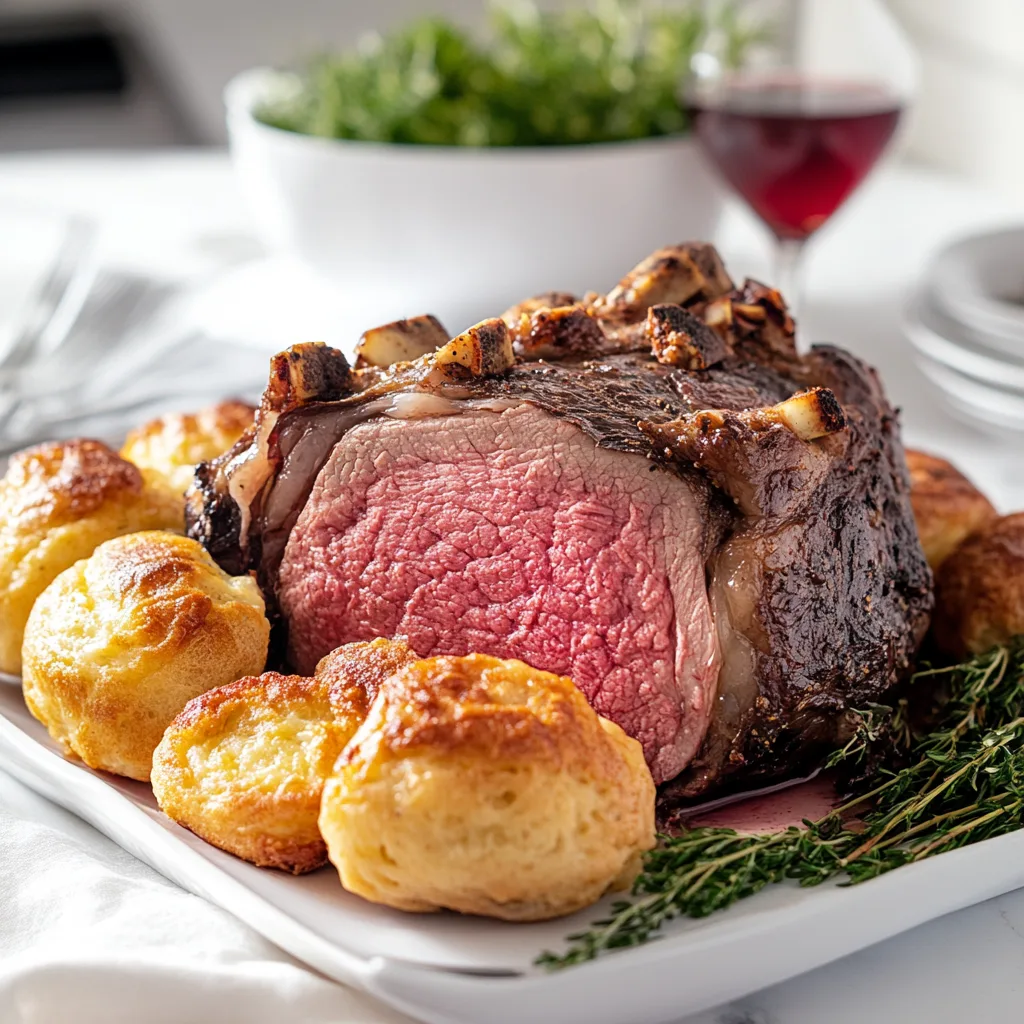
Table of Contents
Recipe
Print
Classic Prime Rib with Yorkshire Pudding Recipe | Traditional Roast Dinner Guide
- Prep Time: 25 minutes
- Cook Time: 2 hours
- Total Time: 2 hours 25 minutes
- Yield: 6 servings
- Category: Dinner
- Method: Roasted
- Cuisine: British
Description
This classic prime rib with Yorkshire pudding is the ultimate traditional roast dinner. Juicy, tender prime rib pairs with light, airy Yorkshire puddings made from simple pantry ingredients—perfect for holidays and special family meals.
Ingredients
FOR THE PRIME RIB:
1 (4–5 pound) bone-in prime rib roast
2 teaspoons kosher salt
1 teaspoon black pepper
1 teaspoon garlic powder
1 teaspoon onion powder
1 teaspoon dried rosemary, crushed
1 teaspoon dried thyme
3 cloves garlic, minced
2 tablespoons olive oil or butter
FOR THE YORKSHIRE PUDDING:
1 cup all-purpose flour
1 cup whole milk
3 large eggs
1/2 teaspoon salt
2–3 tablespoons beef drippings or oil
Instructions
1. Remove the prime rib from the fridge 1–2 hours before cooking.
2. Preheat oven to 450°F (230°C).
3. Make a paste with salt, pepper, garlic powder, onion powder, rosemary, thyme, minced garlic, and olive oil or butter.
4. Pat roast dry and coat fully with the herb paste.
5. Place roast bone-side down in a roasting pan and roast for 15–20 minutes.
6. Reduce oven temperature to 325°F (165°C) and continue roasting for 1 1/2–2 hours or until internal temperature reaches 120–125°F (49–52°C) for medium-rare.
7. Transfer roast to a board, tent with foil, and let rest 20–30 minutes.
8.
9. Increase oven temperature to 425°F (220°C) for Yorkshire pudding.
10. Whisk flour, milk, eggs, and salt until smooth; rest batter for 10 minutes.
11. Add beef drippings to a muffin tin and heat in the oven until very hot.
12. Pour batter into each well (about halfway full).
13. Bake for 20–25 minutes until puffed and golden.
14. Serve prime rib with Yorkshire puddings and pan jus or gravy.
Notes
Let Yorkshire batter rest for even puffier results.
Use drippings from the roast for unbeatable flavor.
Prime rib doneness: 120–125°F medium-rare, 130–135°F medium.
Why You’ll Love This Classic Prime Rib with Yorkshire Pudding
A Foolproof Method for Perfect Results
Getting that perfect medium-rare center with a flavorful crust isn’t just luck – it’s science! My method uses a reverse-sear technique that ensures even cooking from edge to edge. Starting low and slow allows the meat to cook gently, preserving all those flavorful juices, while the final high-heat blast creates that mouthwatering outer crust. The Yorkshire puddings rise dramatically in the oven, creating golden, crispy exteriors with soft, custardy centers that are perfect for soaking up the rich beef juices. Even if you’re new to roasting, these step-by-step instructions will guide you to restaurant-quality results.
Impressive Yet Surprisingly Simple
Don’t let the elegant presentation fool you – this meal is actually quite straightforward to prepare. The prime rib needs minimal hands-on attention, with most of the magic happening in the oven while you relax. The Yorkshire puddings come together with just four basic ingredients you likely already have. What I love most is how the timing works beautifully – while the roast rests (an essential step!), the Yorkshire puddings bake to perfection. The result is a synchronized culinary symphony that looks like you spent all day in the kitchen, when really, the oven did most of the heavy lifting!
Essential Tips & Tricks
Selecting and Preparing Your Prime Rib
Choosing the right cut makes all the difference. Look for a well-marbled roast with a bright red color and a nice cap of fat on top – this natural basting layer is flavor gold! Ask your butcher for a bone-in rib roast (sometimes called a standing rib roast) with the bones cut away from the meat but tied back on. This gives you the flavor benefits of bone-in cooking with the ease of boneless carving. Season generously with salt at least 24 hours before cooking to allow it to penetrate deeply. I love adding fresh rosemary, thyme, and crushed garlic for an aromatic herb crust that complements the rich beef perfectly.
The Secret to Perfect Yorkshire Puddings
The key to towering Yorkshire puddings lies in two critical factors: screaming hot fat and cold batter. Prepare your batter at least an hour ahead and let it rest in the refrigerator – this allows the gluten to relax and the flour to fully hydrate. While your prime rib rests, heat a muffin tin with beef drippings (or vegetable oil) until it’s smoking hot before pouring in the batter. That dramatic temperature contrast creates the steam explosion that makes them puff magnificently. Never, ever peek while they’re baking – that escaping heat will cause them to deflate faster than a popped balloon! For extra insurance, whip the eggs thoroughly and make sure all ingredients are at room temperature except the rested batter.
Serving Ideas & Creative Variations
Creating the Ultimate Prime Rib Feast
A classic prime rib dinner deserves worthy accompaniments. I serve mine with a silky au jus made from the roasting pan drippings, plus a dollop of tangy horseradish cream that cuts through the richness perfectly. For sides, creamy mashed potatoes and roasted Brussels sprouts with bacon complement the beef beautifully. Arrange everything on a large platter for a stunning presentation, with the sliced prime rib taking center stage surrounded by the golden Yorkshire puddings. Don’t forget a bold red wine to complete the experience – a Cabernet Sauvignon or Malbec stands up nicely to the robust flavors of this feast.
Seasonal Twists and Flavor Variations
While the classic version is timeless, I love adding seasonal touches to make this meal special for different occasions. For winter holidays, try incorporating rosemary and cranberry elements – a cranberry reduction alongside the horseradish cream adds a festive touch. In autumn, a crust of crushed peppercorns and sage creates a warming, aromatic profile. For the Yorkshire puddings, experiment with adding grated Parmesan or finely chopped herbs to the batter. My personal favorite twist is making mini Yorkshire puddings and serving them as appetizers filled with thin slices of the prime rib and a dot of horseradish cream – they disappear in seconds when guests arrive!
Storage & Troubleshooting Guide
Making the Most of Leftovers
Prime rib leftovers are culinary gold! Store any remaining meat in an airtight container in the refrigerator for up to 4 days. For the best texture, avoid reheating in the microwave which can make it tough. Instead, wrap slices in foil with a splash of beef broth and warm in a 250°F oven just until heated through. Leftover prime rib makes incredible sandwiches on crusty bread with horseradish mayo, or try thinly slicing it cold for an epic salad. Yorkshire puddings don’t store quite as well, but can be refreshed in a hot oven for a few minutes. I sometimes make extra intentionally, knowing how luxurious those next-day prime rib hash breakfasts will be!
Troubleshooting Common Challenges
Even experienced cooks encounter challenges! If your prime rib is browning too quickly, loosely tent it with foil, being careful not to seal it completely which would steam the meat. For perfect doneness, always use a meat thermometer – visual cues can be misleading. If your Yorkshire puddings didn’t rise, the most common culprits are opening the oven door too soon or oil that wasn’t hot enough. For flat or greasy puddings, make sure your batter isn’t too thick and that your oven temperature is accurate. Remember that high-quality ingredients make a difference – fresh eggs and good flour create better structure in Yorkshire puddings, while prime-grade beef will be more forgiving during cooking.
Frequently Asked Questions
What temperature should prime rib be cooked to?
For medium-rare, aim for 120-125°F internal temperature before resting. The temperature will rise 5-10 degrees while resting. For medium, target 130-135°F before resting. Always use a reliable meat thermometer inserted into the thickest part.
Can I make Yorkshire puddings ahead of time?
The batter can be made up to 24 hours ahead and refrigerated. However, Yorkshire puddings are best baked just before serving while the prime rib rests. They lose their crisp texture when stored.
How much Classic Prime Rib with Yorkshire Pudding should I prepare per person?
Calculate about ¾-1 pound of bone-in prime rib per adult (or ½ pound boneless). This accounts for shrinkage during cooking and ensures enough for seconds. Plan for 2-3 Yorkshire puddings per person.
Why did my Yorkshire puddings collapse?
Opening the oven door before they’re set introduces cool air that causes deflation. Also check your batter consistency (should be like heavy cream) and ensure your oil was smoking hot before adding batter.
Can I use the same method for a smaller roast?
Yes! The reverse-sear method works beautifully for smaller cuts too. Simply adjust cooking times accordingly, always using a meat thermometer rather than time as your guide.
Final Thoughts
There’s something truly special about serving a Classic Prime Rib with Yorkshire Pudding to people you love. The anticipation as it roasts, filling your home with mouthwatering aromas. The pride when you present that perfectly cooked roast. The joy of watching faces light up with the first bite. This isn’t just dinner – it’s an experience, a celebration of good food and togetherness. I hope this recipe becomes part of your own tradition of memorable meals, just as it has in my home. If you try it, I’d love to see your results! Tag me on Pinterest with your beautiful creations. Happy cooking, friends!