

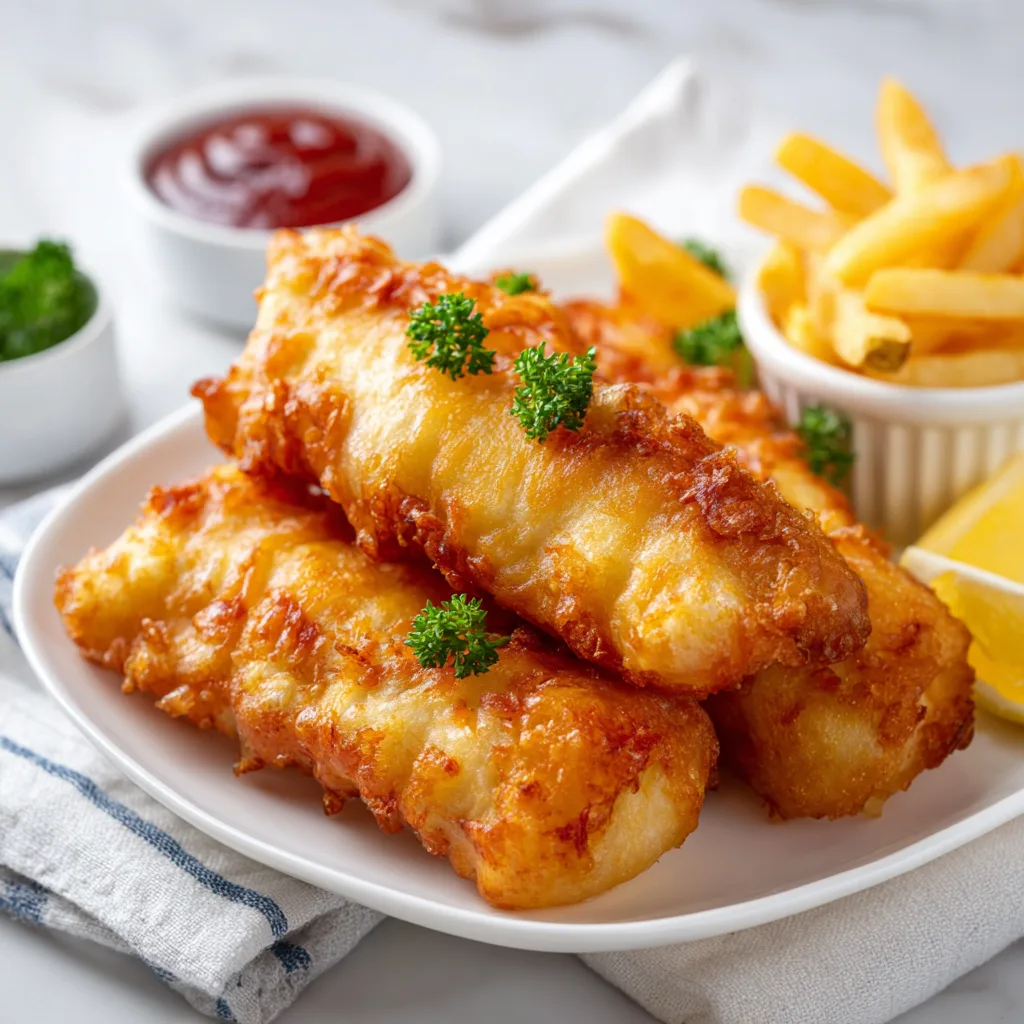
Classic British Fish & Chips—is there anything more quintessentially British than this beloved dish? The moment that first crispy, golden bite hits your tongue, you’re transported to a seaside town with the scent of salt in the air. I’ve spent years perfecting my version of this traditional comfort food, and today I’m sharing all my secrets for achieving that perfect balance of flaky fish and crispy chips. Whether you’re craving a taste of England or simply want to master this iconic dish, my foolproof recipe will have you serving up restaurant-quality fish and chips right in your own kitchen. Trust me, once you try homemade fish and chips, you’ll never look back!
Table of Contents
Recipe
Print
Classic British Fish & Chips
- Prep Time: 15 minutes
- Cook Time: 25 minutes
- Total Time: 40 minutes
- Yield: 4 servings
- Category: Dinner
- Method: Frying
- Cuisine: British
Description
This Classic British Fish & Chips recipe features crispy golden battered fish served with perfectly fried chips. Light, crunchy batter paired with tender flaky fish makes this authentic dish a timeless favorite for a comforting meal.
Ingredients
4 white fish fillets (cod or haddock)
1 cup all-purpose flour
1 teaspoon baking powder
1/2 teaspoon salt
1/2 teaspoon black pepper
1 cup cold sparkling water or beer
4 large potatoes, peeled and cut into thick fries
Vegetable oil for frying
Lemon wedges for serving
Tartar sauce for serving
Instructions
1. Heat oil in a deep fryer or large pot to 350°F (175°C).
2. Peel and cut potatoes into thick chips.
3. Rinse and pat dry thoroughly.
4. Fry the potatoes in batches for about 5–6 minutes until soft but not browned.
5. Remove and drain on paper towels.
6. In a bowl mix flour, baking powder, salt and black pepper.
7. Gradually whisk in cold sparkling water or beer until a smooth batter forms.
8. Pat fish fillets dry and lightly coat them in flour.
9. Dip each fillet into the batter, ensuring it is fully coated.
10. Fry the fish in hot oil for about 5–7 minutes until golden brown and crispy.
11. Remove and drain on paper towels.
12. Return the chips to the oil and fry again for 2–3 minutes until golden and crispy.
13. Serve fish and chips hot with lemon wedges and tartar sauce.
Notes
Use very cold sparkling water or beer for a light crispy batter.
Double frying the chips gives them the perfect texture.
Cod and haddock are traditional choices for authentic fish and chips.
Serve with malt vinegar for a classic British touch.
Why You’ll Love This Classic British Fish & Chips
Perfect Texture Combination
The magic of fish and chips lies in its contrasting textures. The fish batter should shatter like glass when you bite into it, revealing steamy, tender cod or haddock underneath. I’ve found that using ice-cold soda water creates those essential air bubbles that make the batter incredibly light and crispy. Meanwhile, the chips should be fluffy inside with a golden exterior that’s just the right amount of crisp. This isn’t just dinner—it’s a textural experience that makes your taste buds dance with every bite. The sound of that first crunch is half the pleasure!
Authentic British Flavor
There’s something deeply nostalgic about the authentic flavor of proper fish and chips. The subtle maltiness in the batter from good beer (though you can use non-alcoholic alternatives), the clean taste of fresh white fish, and that distinctive potato flavor that only comes from twice-fried chips. I’ve found that a sprinkle of sea salt and a dash of malt vinegar right after cooking creates that genuine British chip shop experience. When done right, the flavors are simple yet completely satisfying—comfort food at its absolute finest.
Essential Tips & Tricks
Batter Secrets Revealed
The perfect batter is the cornerstone of exceptional fish and chips. I always chill my batter for 30 minutes before using—this slows down gluten development and keeps things crispy. Another game-changer? Adding a tablespoon of baking powder and a pinch of cornstarch to your flour mixture. This creates that airy, light coating that shatters beautifully. Never overmix your batter; those lumps are your friends! They create texture variations that make the coating extra crispy. And here’s my secret weapon: dust the fish with flour before dipping in batter so it adheres perfectly every time.
Frying Technique Mastery
Temperature control is absolutely crucial when frying fish and chips. I always use a thermometer to maintain 350-375°F—too cool and you’ll get greasy food, too hot and the outside burns before the inside cooks. Always fry your chips twice: first at a lower temperature to cook through, then at a higher temp for that golden exterior. For the fish, use a gentle swishing motion as you lower it into the oil to prevent sticking to the bottom of your pan. Check out these crispy fried oyster mushrooms for more frying technique inspiration!
Serving Ideas & Creative Variations
Traditional Accompaniments
No Classic British Fish & Chips is complete without the proper sides. Mushy peas—bright green and lightly minted—provide the perfect fresh contrast to the fried elements. I always serve with lemon wedges for that essential acidic brightness that cuts through the richness. For the authentic experience, wrap everything in paper (parchment works brilliantly) and add small dishes of tartar sauce and malt vinegar for dipping and sprinkling. The British tradition of serving with a strong cup of tea actually makes sense—the tannins help cut through the richness of the meal.
Modern Twists
While I adore traditional fish and chips, sometimes it’s fun to play with creative variations. Try panko breadcrumbs mixed into your batter for extra crunch, or add spices like smoked paprika or curry powder for a flavor boost. For a lighter version, try baked lemon garlic tilapia instead of deep-fried cod. Sweet potato fries make a delicious alternative to regular chips, especially when seasoned with rosemary and sea salt. For a fun party idea, make mini fish and chips served in paper cones—they’re perfect for mingling guests and create an impressive presentation!
Storage & Troubleshooting Guide
Keeping It Crispy
The greatest challenge with fish and chips is maintaining that glorious crispness after cooking. For best results, serve immediately—this dish waits for no one! If you must hold them, place on a wire rack in a warm oven (200°F) rather than covering, which traps steam and creates sogginess. When reheating leftovers, never use the microwave. Instead, place in a 375°F oven for 10-15 minutes until hot and re-crisped. The chips will revive better than the fish, but both can be saved from sogginess with proper reheating techniques.
Solving Common Problems
If your batter is sliding off, the likely culprit is moisture on your fish. Always pat fish completely dry and dust with flour before dipping in batter. If your chips are coming out soggy, you’re probably overcrowding the fryer—temperature drop is the enemy of crispness! Fry in smaller batches to maintain oil heat. For batter that’s too thick, add small amounts of cold liquid until you reach a consistency that coats the back of a spoon but drips off slowly. If it’s too thin, add flour a tablespoon at a time until it reaches that perfect, clingy consistency.
Frequently Asked Questions
What’s the best fish for Classic British Fish & Chips?
Cod and haddock are traditional choices due to their firm texture and mild flavor. Pollock and hake make excellent budget-friendly alternatives. Look for thick fillets with white, firm flesh that will hold up well to frying.
Can I make fish and chips without a deep fryer?
Absolutely! A heavy-bottomed Dutch oven works perfectly. Fill it no more than halfway with oil, use a thermometer for temperature control, and you’ll achieve restaurant-quality results without specialized equipment.
How do I keep my batter from getting soggy?
Use cold ingredients, ensure your oil is hot enough (350-375°F), and don’t overcrowd your fryer. Drain on paper towels first, then transfer to a wire rack to prevent steam from making the coating soft.
What’s the secret to crispy chips?
The double-fry method is essential: first at 325°F until cooked but barely golden, then cool completely before frying again at 375°F until crispy and golden brown. This creates the perfect crisp exterior and fluffy interior.
Can I prepare any elements of fish and chips ahead of time?
You can cut and par-fry your chips several hours ahead, then finish with the second fry just before serving. The batter should be made fresh, though you can prepare the dry ingredients in advance.
Final Thoughts
There’s something deeply satisfying about mastering Classic British Fish & Chips at home. The combination of golden, crispy batter and perfectly fried potatoes creates a meal that’s both comforting and impressive. While it might take a bit of practice to perfect your technique, the results are absolutely worth the effort. Whether you’re serving it wrapped in newspaper for authenticity or plated with all the traditional sides, this iconic dish is sure to become a favorite in your recipe collection. For more delicious recipes, follow me on Pinterest!