

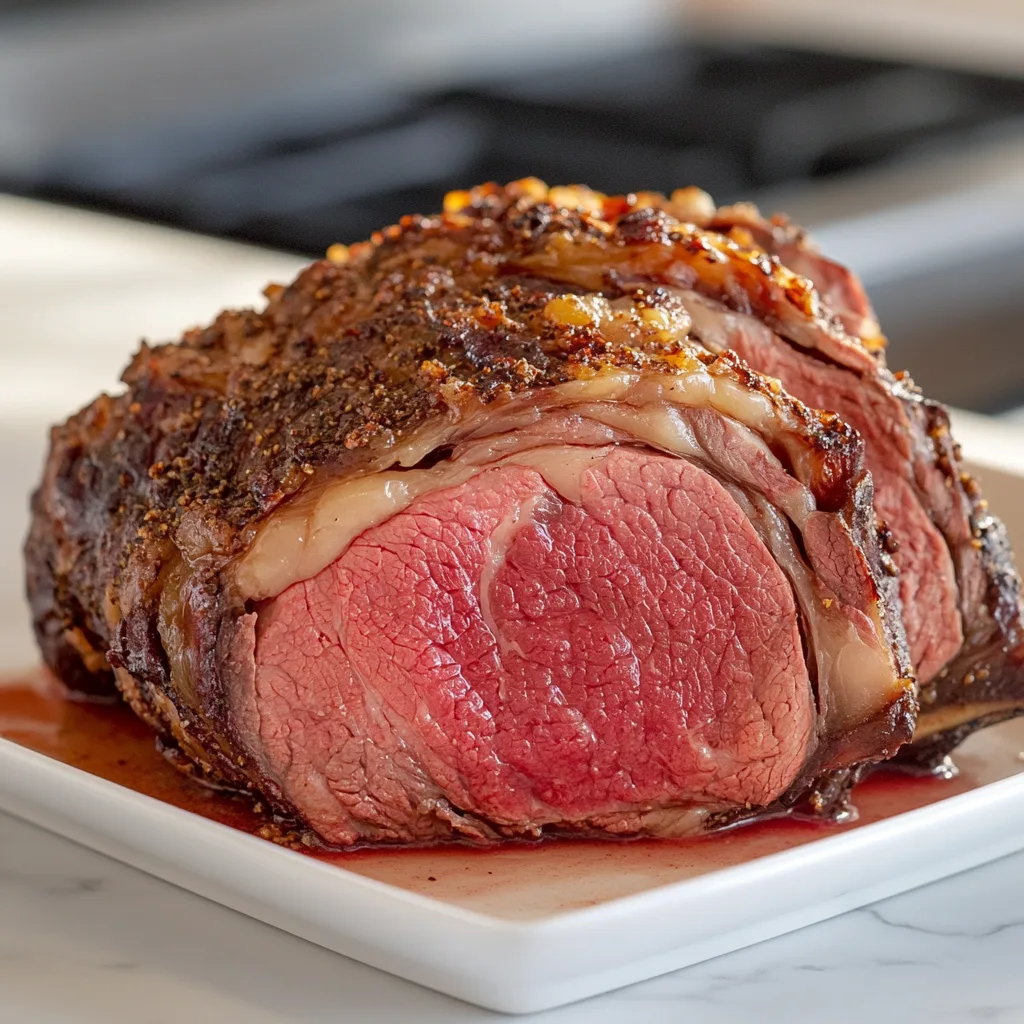
There’s something truly magical about a perfectly cooked prime rib that makes any gathering feel special. Chef John’s Perfect Prime Rib recipe has become my absolute favorite way to create that wow moment at the dinner table.
The first time I made this, the aroma that filled my kitchen was intoxicating—a rich, savory perfume that had everyone wandering in to ask what was cooking. The beauty of this method is the simplicity: it relies on precise temperature control rather than complicated techniques. You’ll get a gorgeous roast with a perfectly seasoned crust and that melt-in-your-mouth interior that prime rib is famous for. Let me walk you through this foolproof approach that will make you feel like a professional chef.
Table of Contents
Recipe
Print
Chef John’s Perfect Prime Rib Recipe | Juicy & Tender Prime Rib Guide
- Prep Time: 15 minutes
- Cook Time: 2 hours
- Total Time: 2 hours 30 minutes
- Yield: 6 servings
- Category: Dinner
- Method: Roasted
- Cuisine: American
Description
This Chef John–style prime rib is unbelievably juicy, tender, and richly flavored. With a simple garlic-herb rub and foolproof roasting method, it delivers a beautifully browned crust and perfect medium-rare interior—ideal for holidays, celebrations, or special dinners.
Ingredients
1 (4–5 pound) bone-in prime rib roast
2 teaspoons kosher salt
1 teaspoon freshly ground black pepper
1 teaspoon garlic powder
1 teaspoon onion powder
1 teaspoon dried rosemary, crushed
1 teaspoon dried thyme
3–4 cloves garlic, minced
2 tablespoons olive oil or softened butter
Instructions
1. Remove the prime rib from the refrigerator 1–2 hours before cooking to bring it to room temperature.
2. Preheat the oven to 450°F (230°C).
3. In a small bowl, mix salt, pepper, garlic powder, onion powder, rosemary, thyme, garlic, and olive oil or butter to create a paste.
4. Pat the roast dry with paper towels and rub the garlic-herb mixture all over the roast.
5. Place the roast bone-side down in a roasting pan.
6. Roast at 450°F (230°C) for 15–20 minutes to form a golden crust.
7. Reduce the oven temperature to 325°F (165°C) and roast for 1 1/2 to 2 hours, or until the internal temperature reaches 120–125°F (49–52°C) for medium-rare.
8. Remove from the oven, tent loosely with foil, and rest for 20–30 minutes.
9. Slice along the bones to remove them, then carve into thick slices and serve.
Notes
Use a meat thermometer for accuracy—prime rib is all about doneness.
Add red wine or beef broth to the pan for a simple jus.
Target internal temps: 120–125°F for medium-rare, 130–135°F for medium.
Why You’ll Love This Chef John’s Perfect Prime Rib
Foolproof Results Every Time
The genius of Chef John’s method lies in its mathematical precision. Instead of guessing when your roast is done, you’ll use a simple temperature formula that takes the guesswork out completely. For a 5-pound roast, I start with a blazing hot oven (500°F) for exactly 5 minutes per pound, then shut it off completely and let the residual heat work its magic for two hours. The results are consistently stunning—a perfect medium-rare from edge to edge with that coveted rosy color. I’ve tried countless prime rib recipes over the years, but none delivers such reliable results with so little active cooking time. The exterior develops a beautiful herb-crusted finish while the interior stays tender and juicy.
Impressive Yet Surprisingly Simple
Despite its show-stopping appearance, Chef John’s Perfect Prime Rib requires minimal hands-on effort. The prep work is straightforward—just a generous coating of kosher salt, fresh ground pepper, and herbs. What I love most is how this recipe transforms an ordinary Sunday into a special occasion. The first time I served this to my family, there was an actual moment of silence when everyone took their first bite, followed by a chorus of “mmms” that made all the planning worthwhile. The beauty is in the simplicity: quality ingredients, precise timing, and patience. You’ll spend more time enjoying your guests than fussing in the kitchen, which is exactly how special meals should be.
Essential Tips & Tricks
Selecting and Preparing Your Roast
Choosing the right cut is your first step toward prime rib perfection. Look for a well-marbled roast with a bright red color and a decent fat cap—this is where much of the flavor comes from! I prefer a bone-in roast (sometimes called a standing rib roast) for the extra flavor, though boneless works beautifully too. Allow your prime rib to come to room temperature for at least 2 hours before cooking.
This crucial step ensures even cooking throughout. I like to pat the roast dry with paper towels before seasoning, which helps create that gorgeous crust we’re all dreaming about. For an extra layer of flavor, try rubbing the roast with garlic paste before applying your herb butter mixture.
Temperature Monitoring Secrets
The absolute key to Chef John’s method is respecting the precise timing formula and—this is crucial—resisting the urge to open the oven door! Every time you peek, heat escapes and disrupts the carefully calculated cooking process. Invest in a good digital meat thermometer, but only use it after the full resting period. The target internal temperature for a perfect medium-rare is 130-135°F. If some guests prefer their meat more done, slice from the ends, which cook more thoroughly.
Remember that your roast will continue cooking during the rest period, rising another 5-10 degrees. This carryover cooking is part of the magic formula, so don’t panic if the temperature seems a bit low when you first check it. Trust the process!
Serving Ideas & Creative Variations
Classic Accompaniments
Nothing complements Chef John’s Perfect Prime Rib quite like traditional sides that balance its rich flavors. I always serve mine with creamy horseradish sauce—the cool, spicy kick cuts through the richness of the meat beautifully. For sides, crispy roasted potatoes seasoned with rosemary and garlic create a perfect textural contrast. I also love adding a bright green vegetable like roasted asparagus or Brussels sprouts with balsamic glaze to bring color and freshness to the plate. Yorkshire puddings are another classic accompaniment—those airy, eggy popovers are perfect for soaking up the flavorful au jus. Speaking of which, don’t discard those precious drippings! Strain them and serve alongside for the ultimate flavor enhancement.
Seasonal Twists and Variations
While the classic preparation is divine, I love adding seasonal touches to make the recipe my own. During winter holidays, I incorporate festive herbs like rosemary and thyme in the crust, perhaps with a touch of orange zest for brightness. In spring, I might add fresh minced herbs like chives or tarragon to the horseradish sauce. For a summer celebration, I’ve been known to serve thinner slices at room temperature with a vibrant chimichurri sauce. The beauty of prime rib is its versatility—the perfect canvas for creativity.
For an unexpected twist, try crusting your roast with peppercorns and serving with a red wine reduction sauce. The combination of the peppery crust and sweet-tart sauce creates a wonderful flavor dialogue.
Storage & Troubleshooting Guide
Making the Most of Leftovers
Prime rib leftovers are a luxury worth planning for! Store any remaining roast in an airtight container in the refrigerator for up to 4 days. For the best texture when reheating, slice the meat thinly and warm it gently in beef broth over low heat—this prevents the meat from drying out or overcooking. My favorite way to repurpose leftovers is in luxurious sandwiches with caramelized onions and a smear of horseradish cream on crusty bread.
For something different, try adding diced prime rib to breakfast potatoes with bell peppers and onions, topped with a fried egg. The rich meat adds incredible flavor to soups and stews too. If you have more than you can use within a few days, freeze individual portions wrapped tightly in plastic and foil.
Solving Common Problems
Even with Chef John’s foolproof method, occasional challenges can arise. If your crust isn’t as golden as you’d like, a quick solution is a butter baste with herbs during the last few minutes under the broiler—just watch it carefully! For a roast that’s underdone for some guests, keep a small pot of simmering beef broth ready, and briefly dip their slices in to cook them a bit more without drying them out.
If you accidentally overcook your prime rib, all is not lost—slice it very thinly and serve with extra au jus to add moisture back. Temperature variations between ovens can affect cooking time, so if you find your roast consistently under or overdone, adjust your formula slightly next time—perhaps 4.5 or 5.5 minutes per pound instead of 5.
Frequently Asked Questions
Can I use this method for smaller or larger roasts?
Absolutely! The beauty of Chef John’s formula is its scalability. Simply adjust the initial high-heat roasting time to 5 minutes per pound of meat, then follow the same rest period instructions.
How far in advance can I season the roast?
For best results, season your prime rib up to 24 hours in advance and refrigerate uncovered. This dry-brining process enhances flavor and helps develop a beautiful crust.
What’s the best way to carve Chef John’s Perfect Prime Rib?
Remove the bones first (if using bone-in) by cutting along the curve of the ribs. Then place the roast flat-side down and cut perpendicular to the cutting board in even slices.
Can I add other herbs and spices to the crust?
Definitely! While the classic salt and pepper crust is wonderful, experiment with garlic, rosemary, thyme, or even a touch of smoked paprika for variety.
What wine pairs best with prime rib?
Bold reds with good tannin structure complement prime rib beautifully. Try Cabernet Sauvignon, Malbec, or Syrah to balance the rich, fatty flavors of the meat.
Final Thoughts
Chef John’s Perfect Prime Rib has transformed how I approach special occasion cooking. There’s something deeply satisfying about mastering a technique that consistently delivers such impressive results with minimal stress. The mathematical precision combined with quality ingredients creates a dish that feels both luxurious and approachable. I love seeing the joy on my guests’ faces when I bring this magnificent roast to the table—it’s a reminder that good food brings people together in the most wonderful ways. For more inspiration and variations on this classic recipe, visit my Pinterest collection where I’ve gathered all my favorite prime rib serving ideas and accompaniments. Here’s to creating memorable meals that become part of your family traditions!