

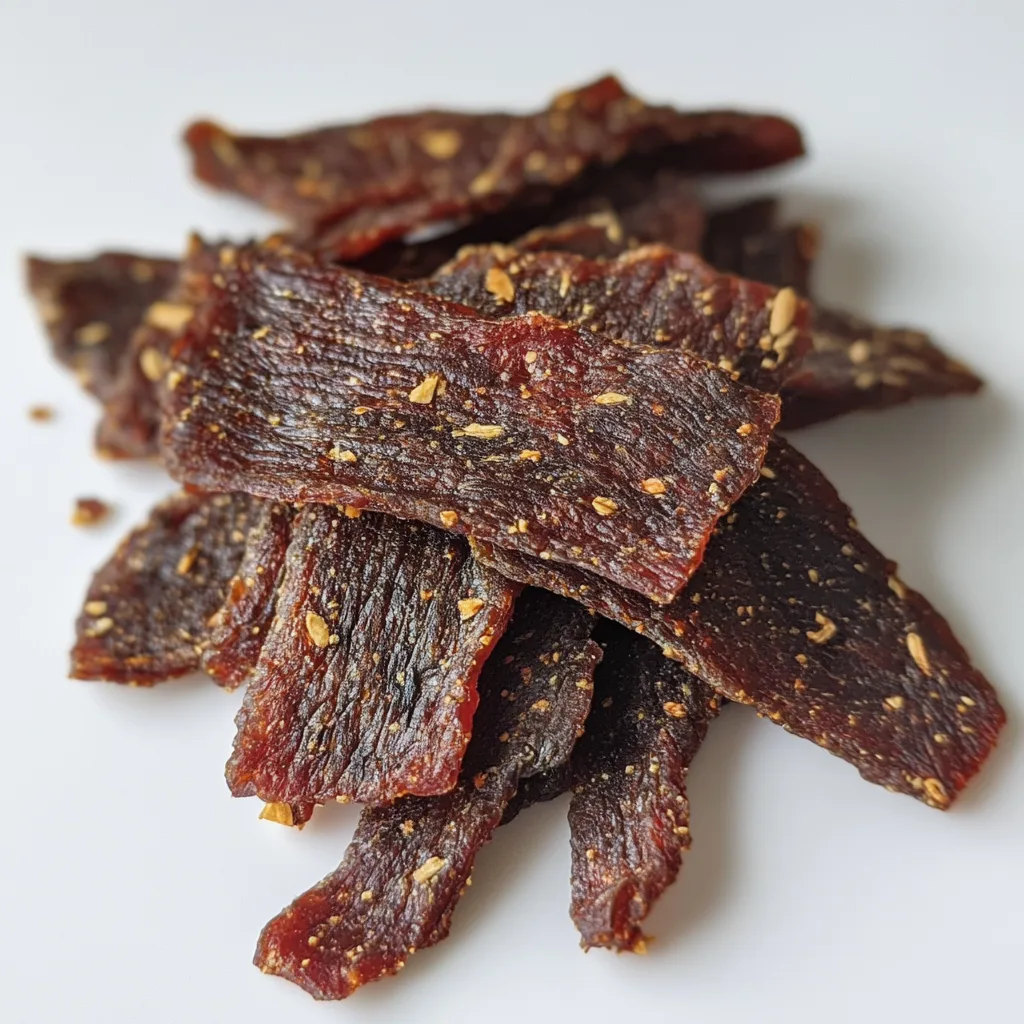
Beef jerky has been my absolute obsession lately. There’s something deeply satisfying about the chewy texture, rich flavors, and the way each bite releases those incredible marinades that have been lovingly absorbed into the meat. Making your own jerky at home is surprisingly simple, and the results are miles better than anything store-bought. The fragrant spices filling your kitchen as it dries will have everyone wandering in to ask what that amazing smell is! I’ve perfected this recipe through countless test batches, and I’m thrilled to share my secrets with you on Treatiful.
Table of Contents
Recipe
Print
Premium Beef Jerky | Gourmet, High-Protein Snacks Made Fresh
- Prep Time: 20 minutes
- Cook Time: 4 hours
- Total Time: 4 hours 20 minutes (plus marinating time)
- Yield: 8 servings
- Category: Snack, High-Protein, Homemade
- Method: Oven Drying, Dehydrating
- Cuisine: American
Description
This Premium Beef Jerky recipe delivers gourmet, high-protein perfection! Tender strips of top-round beef marinated in soy, garlic, and brown sugar, then slowly dried for a smoky, flavorful snack that’s fresh, chewy, and totally addictive.
Ingredients
**For the Marinade**
½ cup low-sodium soy sauce
2 tbsp Worcestershire sauce
2 tbsp brown sugar
1 tbsp liquid smoke (optional, for smokiness)
1 tsp black pepper
1 tsp onion powder
1 tsp garlic powder
½ tsp smoked paprika
¼ tsp crushed red pepper flakes (optional)
**For the Beef**
2 lbs lean beef (top round, flank, or sirloin tip), thinly sliced
Nonstick spray or parchment paper (for drying)
Instructions
1. Trim any visible fat from the beef — leaner cuts make better jerky.
2. Place the beef in the freezer for 30–45 minutes to make slicing easier.
3. Slice beef into thin strips (about ⅛–¼ inch thick) against the grain for tenderness.
4. In a large bowl, whisk together soy sauce, Worcestershire sauce, brown sugar, and seasonings.
5. Add beef strips to the marinade, ensuring each piece is coated. Cover and refrigerate at least 6 hours, preferably overnight.
6. Preheat oven to 175°F (80°C) or prepare a dehydrator.
7. Lay beef strips in a single layer on baking racks or dehydrator trays (avoid overlapping).
8. Bake or dehydrate for 3–5 hours, turning halfway, until dry but still slightly pliable.
9. Cool completely, then store in airtight containers for up to 2 weeks at room temperature or 1 month refrigerated.
10. Enjoy your gourmet, homemade high-protein snack!
Notes
Slice beef evenly to ensure consistent drying.
Adjust sweetness or spice by tweaking brown sugar and red pepper.
For extra tender jerky, marinate longer (up to 24 hours).
Vacuum-seal for long-term freshness — great for hiking, travel, or gym snacks!
Why You’ll Love This Beef Jerky
Perfect Texture Every Time
The key to mouthwatering beef jerky lies in achieving that perfect balance between tender chew and satisfying resistance. Unlike many commercial versions that leave your jaw aching, homemade jerky offers a delightful texture that’s firm yet yielding. I’ve found that slicing the meat against the grain at a consistent 1/8-inch thickness makes all the difference. The marinade tenderizes while the slow drying concentrates the flavors, creating pieces that snap slightly when bent but don’t break. The sensation of tearing into a piece and feeling it gradually soften as you chew is genuinely one of life’s simple pleasures.
Customizable Flavor Profiles
What I adore most about making beef jerky at home is the ability to create personalized flavor combinations that simply don’t exist on store shelves. Want something with a fiery kick? Add more crushed red pepper. Craving a sweet-savory balance? Increase the brown sugar and add a splash of maple syrup. My base recipe uses a magical combination of soy sauce, Worcestershire, garlic, and black pepper, but I’ve created everything from coffee-infused to Thai-inspired versions. The meat becomes a canvas for whatever flavors you’re craving, absorbing all those wonderful ingredients during its overnight marinade soak.
Essential Tips & Tricks
Selecting and Preparing the Meat
Choosing the right cut makes all the difference in your jerky’s final texture. I always reach for lean cuts like eye of round, top round, or bottom round—they deliver consistent results without excess fat that can spoil quickly. Before slicing, I place the meat in the freezer for about 1-2 hours until it’s firm but not frozen solid. This partial freezing makes creating those thin, even slices infinitely easier. Always trim visible fat thoroughly, as it won’t dry properly and can lead to rancidity. For the most tender results, slice against the grain at a slight angle with a very sharp knife, maintaining that crucial 1/8-inch thickness.
Drying Methods and Timing
While a food dehydrator offers the most consistent results, you can absolutely make excellent jerky in your oven. For oven drying, I set the temperature between 160-170°F and prop the door slightly open with a wooden spoon to allow moisture to escape. Arrange your marinated strips on wire racks over baking sheets, being careful not to overlap pieces. The drying time varies (4-8 hours) depending on your method, thickness, and desired chewiness. The jerky is ready when it bends and cracks but doesn’t break completely—similar to a piece of leather. Always let it cool completely before testing the final texture.
Serving Ideas & Creative Variations
Beyond the Basic Snack
While beef jerky makes a perfect portable protein for hikes and road trips, don’t limit yourself to just snacking straight from the bag. I love chopping it finely to add intense flavor to scrambled eggs or sprinkle over salads for a savory protein boost. It makes an unexpected but delicious addition to cheese boards, especially paired with sharp cheddar and pickled vegetables. For an elevated appetizer, wrap small pieces around cream cheese-stuffed peppadews. The jerky’s concentrated flavors also make it an excellent ingredient to infuse depth into broths and stocks—similar to how I use flavor-packed ingredients in my hearty soups.
International Flavor Inspirations
Take your jerky global by experimenting with international marinades that transform the basic recipe into something extraordinary. Korean-inspired jerky with gochujang, sesame oil, pear juice, and ginger delivers sweet heat with incredible depth. For a Mediterranean twist, try olive oil, lemon zest, oregano, and garlic. My current obsession is a Caribbean version with allspice, thyme, scotch bonnet peppers, and a splash of dark rum for complexity. Mexican-style jerky with lime, cumin, and chipotle creates a smoky, tangy profile that’s irresistible. These variations turn simple beef into conversation-worthy treats that friends will beg you to make again.
Storage & Troubleshooting Guide
Proper Storage Techniques
Once your beef jerky has completely cooled, proper storage methods become crucial for maintaining both safety and flavor quality. I prefer vacuum-sealed bags for maximum freshness, but heavy-duty ziplock bags with the air pressed out work well too. Store your jerky in a cool, dark place for up to two weeks, or refrigerate for 1-2 months of extended shelf life. For even longer storage, jerky freezes beautifully for up to 6 months—just thaw at room temperature before enjoying. Always include a food-grade desiccant packet if you have them to absorb any residual moisture. The key is protecting your jerky from air, light, and humidity, which can all degrade those wonderful flavors you’ve worked so hard to develop.
Common Problems and Solutions
Even experienced jerky makers encounter occasional issues, but most are easily fixed. If your jerky turns out too dry and brittle, you’ve likely over-dried it—next time, check earlier and remember it continues to firm up as it cools. Too soft and pliable? It needs more drying time, as underdried jerky can spoil quickly. White spots usually indicate salt rising to the surface during drying—simply brush them off. For mold prevention, ensure complete drying and proper storage.
If your jerky lacks flavor intensity, try marinating longer (12-24 hours) and adding more salt to help the meat absorb those delicious seasonings. Remember that jerky shrinks considerably, so what might seem like too much seasoning often becomes perfectly balanced in the final product.
Frequently Asked Questions
How long does homemade beef jerky last?
When properly dried and stored in airtight containers, homemade beef jerky typically lasts 1-2 weeks at room temperature, 1-2 months refrigerated, and up to 6 months frozen. Always check for any off smells or visible mold before eating.
Can I use a smoker instead of a dehydrator?
Absolutely! Smokers create exceptional beef jerky with natural smoke flavor. Maintain temperatures between 160-180°F and expect similar drying times (4-6 hours) while monitoring for your desired texture.
Is beef jerky healthy?
Homemade beef jerky can be quite nutritious—high in protein, low in carbs, and free from the preservatives found in commercial versions. Just be mindful of sodium content in your marinades if watching salt intake.
What’s the best cut of meat for making beef jerky?
Eye of round is my top choice for beef jerky because it’s lean, economical, and has minimal connective tissue. Top round, bottom round, and flank steak are excellent alternatives with similar qualities.
Why is my beef jerky too salty?
Over-salted beef jerky usually results from excessive soy sauce or salt in the marinade. Remember that flavors intensify during drying—try reducing salt by 25% or briefly rinsing marinated meat before drying.
Final Thoughts
Making beef jerky at home has become one of my favorite weekend kitchen projects—the process is therapeutic, the results are delicious, and there’s something deeply satisfying about creating such a shelf-stable treat from scratch. I love how the entire house fills with those savory aromas as it dries, signaling the deliciousness to come. Whether you’re a first-timer or looking to elevate your jerky game, I hope these tips inspire you to experiment with your own signature flavors. For more kitchen inspiration, check out my Pinterest boards where I’m always adding new ideas for homemade snacks and preserving techniques.