

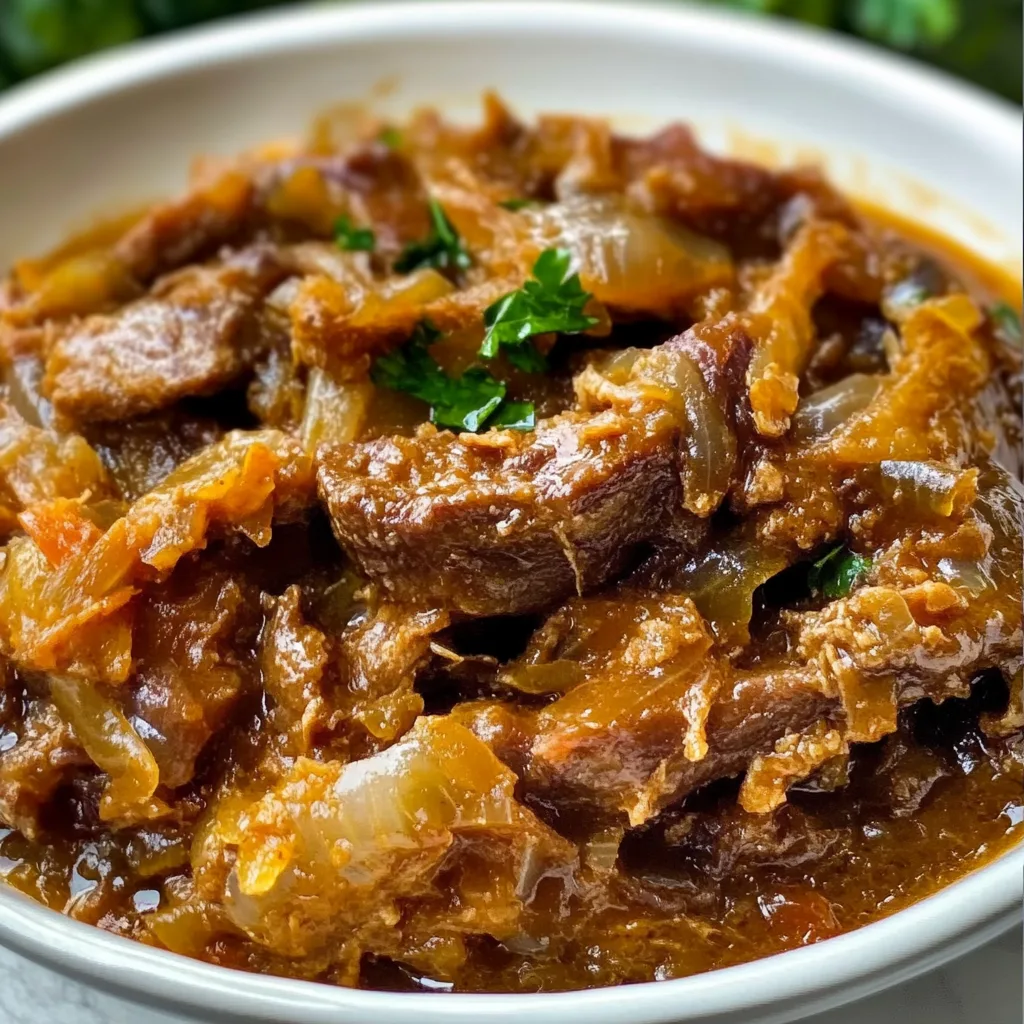
Bigos stew, often called “Hunter’s Stew,” is Poland’s beloved national dish that captures the essence of comfort food. As someone who cherishes recipes with rich histories, I’m thrilled to share this hearty masterpiece with you. The magical combination of sauerkraut, fresh cabbage, and various meats creates a symphony of deep umami flavors that only improves with time. Each spoonful tells the story of generations past, making it perfect for those cold evenings when you need something truly satisfying. I first discovered this stew during a snowy winter visit to a Polish friend’s home, and I’ve been perfecting my version ever since.
Table of Contents
Recipe
Print
Traditional Bigos Stew Recipe | Authentic Polish Hunter’s Stew Guide
- Prep Time: 20 minutes
- Cook Time: 2 hours
- Total Time: 2 hours 20 minutes
- Yield: 6 servings
- Category: Dinner, Stew, Comfort Food
- Method: Simmering, One-Pot
- Cuisine: Polish, Eastern European
Description
This Traditional Bigos Stew is rich, hearty, and authentically Polish! Loaded with sauerkraut, cabbage, smoky meats, and earthy mushrooms, it’s a cozy, flavorful hunter’s stew that tastes even better the next day.
Ingredients
**Base Ingredients**
2 tbsp vegetable oil or bacon fat
1 large onion, diced
3 cloves garlic, minced
2 cups sauerkraut, drained and rinsed
2 cups fresh green cabbage, shredded
1 cup dried mushrooms (or 1 ½ cups fresh), chopped
2 cups diced tomatoes (or 1 can crushed tomatoes)
½ cup dry red wine (optional)
1 cup beef broth or water
**Meats (Traditional Mix)**
½ lb pork shoulder or pork stew meat, cubed
½ lb smoked kielbasa sausage, sliced
½ lb beef stew meat (or venison, traditional option)
4 oz bacon, chopped
**Seasonings**
2 bay leaves
1 tsp caraway seeds
½ tsp smoked paprika
½ tsp black pepper
Salt to taste
1 tbsp tomato paste (optional for richer color)
Instructions
1. Heat oil or bacon fat in a large heavy pot or Dutch oven over medium heat. Add onion and bacon, and cook until onion softens and bacon begins to crisp, about 5 minutes.
2. Add pork and beef cubes, season with salt and pepper, and brown on all sides.
3. Add garlic and kielbasa; cook another 3–4 minutes to render flavors.
4. Stir in sauerkraut, fresh cabbage, mushrooms, tomatoes, tomato paste, and wine (if using).
5. Add broth, bay leaves, caraway seeds, and smoked paprika. Mix well.
6. Bring to a gentle simmer, then reduce heat to low. Cover and cook for 1½–2 hours, stirring occasionally.
7. Taste and adjust seasoning with salt and pepper.
8. The longer Bigos cooks, the richer it becomes — many Polish families let it simmer for hours or even reheat it over several days for deeper flavor.
9. Serve warm with rye bread or mashed potatoes. Enjoy authentic Polish comfort!
Notes
Traditional Bigos gets better after resting — refrigerate overnight and reheat for deeper flavor.
You can mix different meats: venison, beef, pork, and sausage are all authentic.
Add a few prunes or a spoonful of honey for a subtle sweet balance.
Freezes beautifully for up to 3 months.
Why You’ll Love This BIGOS STEW
A Perfect Make-Ahead Meal
This robust Polish stew is practically designed for busy home cooks who appreciate efficiency without sacrificing flavor. The beauty of bigos lies in how it transforms over time—make it on Sunday, and by Tuesday, you’ll swear it’s an entirely different dish! The flavors meld and deepen as it sits, with the tanginess of sauerkraut mellowing while the meats become increasingly tender. I often make a double batch and freeze portions for those hectic weeknights when cooking from scratch feels impossible. The aroma that fills your kitchen as it simmers is worth the effort alone—earthy, slightly sweet, with hints of bay leaf and allspice.
Adaptable to Your Pantry
One of the things I adore about bigos stew is its forgiving nature. Traditional recipes call for a medley of meats—pork shoulder, kielbasa, bacon, sometimes even wild game—but I’ve made delicious versions with whatever proteins were lurking in my freezer. The cabbage foundation (both fresh and fermented) provides the distinctive tangy backbone, while the meat adds richness. No dried mushrooms? Fresh will work. Missing juniper berries? A splash of gin adds a similar forest-like note. Even the wine can be substituted with beef broth in a pinch. This adaptability makes bigos perfect for cleaning out the refrigerator while still creating something magnificent.
Essential Tips & Tricks
The Slow Cooking Secret
The most important technique for exceptional bigos stew is embracing low-and-slow cooking. This isn’t a quick weeknight dinner—it’s a labor of love that rewards patience. I recommend a minimum three-hour simmer, but the magic really happens around hours 4-5 when everything begins to caramelize slightly and meld together. The transformation is remarkable—what begins as distinct ingredients becomes a harmonious whole. My favorite method is starting it on the stovetop to develop those initial caramelized flavors, then transferring to a 325°F oven where the heat distributes more evenly. The gentle bubbling will fill your home with an aroma that makes waiting almost unbearable.
Balancing Sweet and Sour
Achieving the perfect balance between tangy sauerkraut and sweeter elements is crucial for authentic bigos. I’ve found that rinsing the sauerkraut once (not excessively) helps control acidity while preserving character. Adding grated apple or a tablespoon of honey creates a subtle sweetness that rounds out sharp edges. Tomato paste contributes both umami and natural sweetness while adding gorgeous color depth. The key is tasting throughout the cooking process—the flavor evolves substantially over time. If your stew tastes too sharp after a few hours, a drizzle of honey or brown sugar can work wonders. Conversely, if it’s too sweet, a splash of red wine vinegar brings back complexity.
Serving Ideas & Creative Variations
Traditional Polish Accompaniments
Bigos stew shines brightest when served with the right companions. Crusty rye bread is traditional and perfect for soaking up the rich sauce—I love tearing off chunks and using them as edible spoons. For a complete Polish experience, boiled or mashed potatoes make an excellent base, their mild creaminess contrasting beautifully with the stew’s intensity. A dollop of sour cream adds luxurious richness and helps cool the palate. For beverages, nothing complements bigos better than a cold Polish beer or a shot of vodka, as tradition dictates. I like to serve it in pre-warmed bowls with a sprinkle of fresh dill or parsley to add a pop of color and freshness.
Modern Twists on Tradition
While I respect tradition, I also enjoy experimenting with this versatile stew. My favorite variation incorporates smoked paprika for an extra dimension of flavor that complements the traditional spices beautifully. For a lighter version, turkey kielbasa works surprisingly well in place of pork sausage. Vegetarians needn’t miss out—I’ve created a mushroom-forward version using a variety of fungi (porcini, shiitake, cremini) that captures the umami essence without meat. Adding a splash of balsamic vinegar near the end of cooking introduces a modern complexity. For special occasions, I’ve even served bigos in hollowed-out bread bowls—a presentation that never fails to impress guests while honoring the stew’s rustic roots.
Storage & Troubleshooting Guide
Maximizing Leftovers
Bigos stew is famous for tasting even better as leftovers, making proper storage essential. After cooling completely, refrigerate in airtight containers for up to 5 days—the flavors will continue developing beautifully. For longer preservation, freeze portions in freezer-safe containers for up to 3 months. I recommend labeling with the date and thawing overnight in the refrigerator before reheating. When reheating, do so gently on the stovetop with a splash of broth or water to maintain moisture. The natural fats may separate during storage—simply stir them back in while warming. I often make a huge batch specifically for freezing, ensuring comforting meals are always ready when winter weather strikes.
Troubleshooting Common Issues
Even experienced cooks occasionally encounter challenges with this complex stew. If your bigos is too watery, uncover and simmer longer to reduce excess liquid—the consistency should be thick enough to mound on a spoon. Conversely, if it’s too dry, add small amounts of broth or even beer. For overly sour batches, adding caramelized onions or a grated apple provides balancing sweetness. If the meat seems tough after hours of cooking, it likely needs more time—collagen breaks down slowly, especially in larger cuts. For too-salty results (common when using preserved meats), a peeled, quartered potato simmered in the stew for 30 minutes can absorb excess salt before being removed.
Frequently Asked Questions
What makes bigos stew different from other cabbage stews?
Bigos uniquely combines fresh and fermented cabbage (sauerkraut) with multiple meat varieties and distinctive Polish spices like juniper berries and allspice. The long cooking process and aging period create complex flavors unmatched in simpler cabbage dishes.
Can I make bigos stew in a slow cooker?
Absolutely! Brown the meats and sauté the onions first, then transfer everything to your slow cooker for 8-10 hours on low. The gentle, consistent heat works beautifully for developing those rich flavors.
Is bigos stew gluten-free?
Traditional bigos is naturally gluten-free, but always check your sausage ingredients as some contain fillers with gluten. Also ensure your wine and any added condiments are certified gluten-free if serving to those with sensitivities.
How do I know when my bigos stew is done cooking?
Your bigos is ready when the meats are fork-tender, the cabbage has softened completely, and the liquid has reduced to a thick, cohesive sauce. The flavors should taste harmonious rather than distinct.
Can I prepare bigos stew for a large gathering?
Bigos is perfect for crowds! It scales easily, improves with advance preparation, and stays delicious when kept warm in a slow cooker. I’ve served it at winter gatherings for up to 20 people with consistent success.
Final Thoughts
Creating authentic bigos stew connects us to centuries of Polish culinary tradition while offering endless opportunities for personal expression. The magical transformation that happens as this dish cooks reminds me why slow food matters—some flavors simply can’t be rushed. Whether you’re exploring your heritage or simply seeking the ultimate comfort food, this hearty hunter’s stew deserves a place in your recipe collection. I hope you’ll share your bigos adventures with me on Pinterest and discover why this humble cabbage stew has sustained generations through long winters and celebrations alike.