

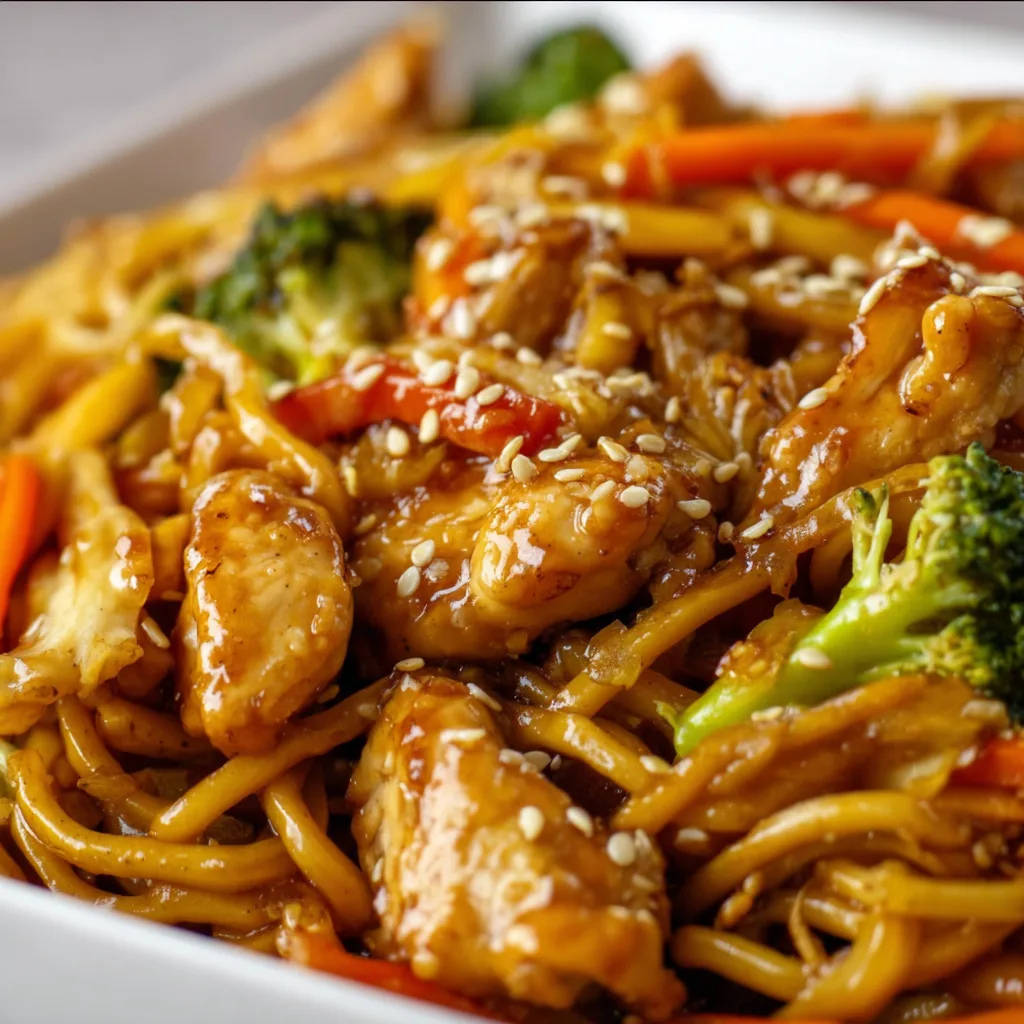
This chicken lo mein takes about 25 minutes and one large skillet or wok, plus a pot for the noodles. The noodles are boiled until al dente, rinsed and set aside while 1 pound of thinly sliced chicken breast browns over medium-high heat. Garlic, red bell pepper, shredded carrots and broccoli follow for 3 to 4 minutes, then the chicken, noodles and a sauce of low-sodium soy sauce, oyster sauce, hoisin sauce, brown sugar and sesame oil are tossed together for 2 to 3 minutes.
Chopped green onions go on top, and it is best served right away. It makes 4 servings.
Table of Contents
Recipe
Print
Delicious Chicken Lo Mein Recipe | Easy Homemade Chicken Lo Mein
- Prep Time: 10 minutes
- Cook Time: 15 minutes
- Total Time: 25 minutes
- Yield: 4 servings
- Category: Dinner
- Method: Stovetop
- Cuisine: Asian-Inspired
Description
This Delicious Chicken Lo Mein Recipe is an easy homemade version of the takeout favorite! Tender chicken, colorful vegetables, and noodles tossed in a flavorful garlic soy sauce — ready in under 30 minutes!
Ingredients
8 ounces lo mein noodles (or spaghetti)
1 pound boneless, skinless chicken breast, thinly sliced
2 tablespoons olive oil or sesame oil
1 red bell pepper, sliced
1 cup shredded carrots
2 cups broccoli florets
3 green onions, chopped
2 cloves garlic, minced
**Lo Mein Sauce:**
1/4 cup soy sauce (low sodium)
1 tablespoon oyster sauce
1 tablespoon hoisin sauce
1 tablespoon brown sugar
1 teaspoon sesame oil
1 teaspoon cornstarch (optional for thickening)
1/4 teaspoon red pepper flakes (optional)
Instructions
1. Cook noodles according to package directions until al dente. Drain, rinse, and set aside.
2. In a small bowl, whisk together all sauce ingredients until smooth. Set aside.
3. Heat 1 tablespoon oil in a large skillet or wok over medium-high heat. Add chicken and cook for 4–5 minutes until browned and cooked through. Remove and set aside.
4. Add remaining oil to the pan. Sauté garlic, bell pepper, carrots, and broccoli for 3–4 minutes until tender-crisp.
5. Return chicken to the pan. Add cooked noodles and pour in the sauce.
6. Toss everything together until evenly coated and heated through (2–3 minutes).
7. Top with chopped green onions and serve immediately.
Notes
Use tamari or coconut aminos for a gluten-free version.
Swap the chicken for shrimp, beef, or tofu.
Leftovers taste amazing — refrigerate up to 3 days and reheat with a splash of water.
Add chili oil or extra soy sauce for extra flavor.
The Noodles
Lo Mein Noodles
The card calls for 8 ounces of lo mein noodles, which are wheat noodles, usually made with egg, sold fresh or dried. Cook them according to the package, since fresh noodles may need only a few minutes and dried ones take longer.
Cook Them Al Dente, Then Rinse
The card cooks the noodles until al dente, then drains and rinses them. They heat through again in the pan with the sauce, so noodles that are fully soft at this stage end up mushy. Rinsing stops the cooking and washes off surface starch, which keeps them from sticking into a block while the chicken and vegetables cook. Loosen them with your fingers or tongs just before they go into the pan.
Using Spaghetti
The card allows spaghetti instead of lo mein noodles. It works, but it is not the same: spaghetti is usually made without egg, it is firmer and less springy, and its smooth surface holds less sauce. Cook it al dente as well, and expect a slightly different texture from egg noodles.
The Sauce
What Goes In
The sauce is whisked together before you start cooking: 1/4 cup of low-sodium soy sauce, 1 tablespoon each of oyster sauce, hoisin sauce and brown sugar, and 1 teaspoon of sesame oil. The soy sauce brings salt, the oyster sauce adds savory depth, the hoisin and brown sugar add sweetness, and the sesame oil adds its toasted flavor.
Cornstarch and Red Pepper Flakes
Both are optional. A teaspoon of cornstarch whisked into the sauce thickens it slightly as it heats, so it clings to the noodles instead of pooling in the pan. Cornstarch settles to the bottom of the bowl, so whisk the sauce again just before you pour it in. The 1/4 teaspoon of red pepper flakes adds mild heat; leave it out for a milder dish.
Salt and Sauce Brands
Soy, oyster and hoisin sauces all contain salt, and their saltiness varies a lot between brands. The card uses low-sodium soy sauce and adds no extra salt. If you use regular soy sauce, the dish will taste noticeably saltier, so start with less and taste. Taste after tossing, before adding the optional extra soy sauce.
Cooking in Stages
Chicken First
Slice the chicken breast thinly and evenly so the pieces cook at the same rate. Heat 1 tablespoon of the oil over medium-high heat and cook the chicken for 4 to 5 minutes, until browned and cooked through. The thickest piece should read 165°F (74°C). If your pan is small, cook it in two batches, because a crowded pan steams the chicken instead of browning it. Move it to a clean plate, not the one that held the raw chicken, and wash anything the raw chicken touched.
Vegetables Until Tender-Crisp
The remaining tablespoon of oil goes into the pan with the garlic, bell pepper, carrots and broccoli for 3 to 4 minutes. Cut the broccoli into small, even florets so they cook in that time; the shredded carrots and sliced pepper soften quickly. Keep everything moving so the garlic does not scorch. The vegetables should still have some bite, because they keep cooking when the noodles and sauce go in.
Noodles and Sauce Go In Last
Return the chicken, add the noodles and pour the sauce over them. Toss with tongs for 2 to 3 minutes, just until everything is evenly coated and hot. The noodles keep absorbing sauce the longer they cook, so stop as soon as they are coated and serve right away.
Which Oil to Use
The card uses 2 tablespoons of olive oil or sesame oil in total, 1 for the chicken and 1 for the vegetables. Toasted sesame oil has a strong flavor and can scorch at medium-high heat, so a light olive oil is the milder choice for cooking, with the teaspoon of sesame oil in the sauce providing the sesame flavor.
Tips for Lo Mein That Is Not Soggy
Do Not Overcook the Noodles
Soft noodles before the stir-fry are the most common cause of mushy lo mein. Pull them while they still have a slight bite.
Give the Pan Room
One pound of chicken, the vegetables and 8 ounces of noodles fill a pan quickly. Use the largest skillet or wok you have, so the vegetables stir-fry instead of steaming and releasing water.
Have Everything Ready
Once the pan is hot, each stage takes only a few minutes. Have the noodles drained, the sauce whisked and the vegetables cut before the chicken goes in.
Swaps and Add-Ins
Shrimp, Beef or Tofu
The notes suggest shrimp, beef or tofu instead of chicken. Shrimp cooks in a few minutes, so take it out as soon as it turns pink and opaque. Slice beef thinly across the grain and sear it quickly so it does not toughen. For tofu, press extra-firm tofu, cut it into cubes and brown it before the vegetables. Whichever you use, cook it first, set it aside and return it with the noodles, as with the chicken.
Gluten-Free
The notes suggest tamari or coconut aminos for a gluten-free version. Swapping the soy sauce is not enough on its own: lo mein noodles and spaghetti are wheat noodles, and oyster and hoisin sauces often contain wheat. Use noodles and sauces labeled gluten-free, and check every label. Coconut aminos are sweeter and less salty than soy sauce, so taste and adjust.
Heat and Garnish
The notes suggest chili oil or extra soy sauce at the table. Chopped green onions go on at the end. The photos also show a sprinkle of sesame seeds, which are not on the card; add them if you like.
Storage and Reheating
The notes say leftovers keep in the refrigerator for up to 3 days. Refrigerate them within 2 hours of cooking, in shallow containers so they cool quickly; do not let them cool completely on the counter first. The noodles absorb sauce as they sit, so add a splash of water when you reheat, as the notes suggest, and warm them in a skillet or in the microwave, stirring partway through, until steaming hot, 165°F (74°C). The card does not cover freezing.
Frequently Asked Questions
What is the difference between lo mein and chow mein?
In this recipe, the boiled noodles are tossed with the vegetables and sauce for just a few minutes, so they stay soft and saucy. Chow mein recipes usually fry the noodles for longer, for a drier texture with some crisp edges.
Why are my noodles mushy?
They were probably cooked past al dente, or they stayed in the pan too long after the sauce went in. Cook them al dente, rinse them, and toss them with the sauce only until hot.
Can I make it less salty?
Yes. Use low-sodium soy sauce, as the card does, and taste before adding any extra soy sauce at the table. Oyster and hoisin sauces also contain salt, so compare labels if salt is a concern.
Final Thoughts
Cook the noodles al dente and rinse them, brown the chicken to 165°F and set it aside, stir-fry the vegetables until tender-crisp, then toss everything with the sauce just until coated and hot. For another stir-fried chicken dinner, try this chicken fried rice.
2 thoughts on “25-Minute Chicken Lo Mein | Chicken Breast, Broccoli and Bell Pepper in a Soy, Oyster and Hoisin Sauce”